
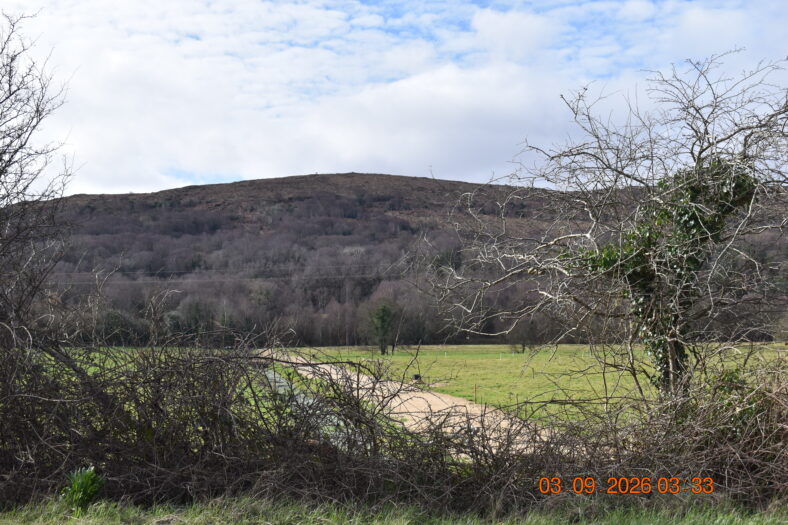
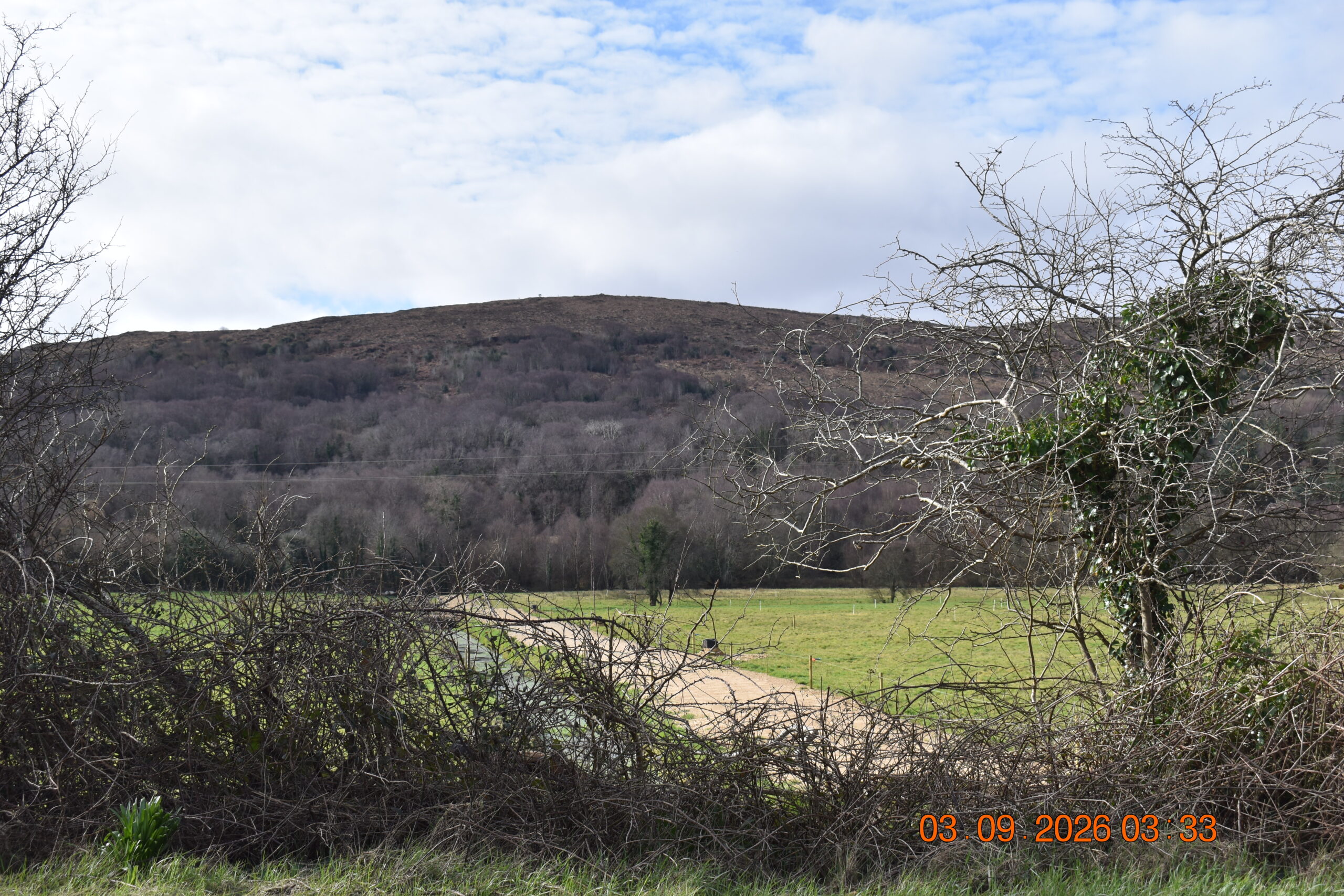
Information from Logainm.ie
Irish: Gort na Móna Thiar
Genitive: Ghort na Móna Thiar
Non-validated name: Placenames or geographical names for which provisional Irish forms have been recommended by the Placenames Branch on the basis of research but which are not specified in Placenames Orders in accordance with the Official Languages Act 2003.
The Irish words gort or gart means field in English. Móin and mónaidh translates to bogland.
Information from O’Donnovan’s Field Name Books – (places.webworld.org).
Standard Name: Gortnamona
Irish Form of Name: Gort na Móna
Translation: Field of the bog
Description: This townland is partially cultivated about the centre being composed of rough boggy land, rocks and furze.
Information from Moycullen and its People
Ciallaíonn Gort na Móna páirc portaigh.
Gort na Móna literally means, the field of the bog.
Townland History and Description
Gortnamona is a townland that is divided into Gort na Móna Thiar, west and Gort na Móna Thoir, east. Part of the ruin of the Gort na Móna house can still be seen today.
Griffith’s Valuations
Griffith’s Valuation was a land and property survey conducted from 1847 to 1863. Its purpose was to determine taxes based on land value and soil quality. In the absence of most pre-20th Century census data, Griffith’s can provide crucial insight to those interested in genealogy. The survey was conducted in Moycullen from 1853 to 1855. Gortnamona West in Griffith’s Valuation can be found here.
Bernard Flatley’s holding was In fee {sic}, meaning he owned the land and its buildings (Herd’s ho., offs., & land, {sic}) outright. Flatley held 95 acres and 30 roods and 13 poles/perches valued at 20 pounds. The buildings were valued at 1 pound.
Flatley’s was the only holding recorded in Griffith’s for Gortnamona West. All rateable property in the townland was valued at 21 pounds annually.
The 1901 Census
According to the Enumerator’s abstract (Form N), Gortnamona West only had three buildings which were all inhabited houses. All are marked as single family homes. Everyone in Gortnamona West was Roman Catholic. There were fifteen people residing in the townland at the time of census collection; nine men and six women. The Information on the House and Building Return (Form B1) was collected for all three households on the 13th of April, 1901. All the dwellings in Gortnamona West were built of stone or brick, with thatched roofs or other natural materials. According to the Out-Offices and Farm-Steadings Return (Form B2) there were two additional structures in the townland used for storage and farming; the structures associated with each household will be elaborated on in the relevant writeup. Individuals recorded in each household (Form A) {sic} slept or abode in this House on the night of Sunday, 31st of March, 1901. The Enumerator was Constable Johnston Morrison.
Daniel Moloney Household – Form A
Daniel Moloney was the head of House 1 in the townland of Gortnamona West in the District Electoral Division of Tullokyne, County Galway. According to the House and Building Return (Form B1) the dwelling was a second-class house, built of stone with a slate or iron roof and had six rooms with five front windows. This was a comfortable home in rural Moycullen at the turn of the twentieth century. The Out-Offices and Farm Steadings Return (Form B2) shows that included on the property was a piggery.
The home was occupied by a family and two other individuals. All members were Roman Catholic and born in Co. Galway.
Daniel Moloney (40) was a Shoemaker and Grocer {sic}. His wife Maria (36) has a dash in her occupation column. The couple could read and write and spoke both Irish and English.
Six of Daniel’s children lived in his home at the time of census collection. Thomas (12), Patrick (10), Margaret (8), Mary (6), and Peter (4) are all listed as Scholars, meaning they attended school. They all were unmarried and spoke Irish and English. Thomas, Patrick and margaret could all read and write. Mary could read, and Peter could not. The youngest Moloney child, John (2), could not read and in his language proficiency column is a scribble.
The householder recorded on the House and Building Return was Daniel Moloney himself, but the landholder was Robert Killett. The return for the household was collected on 13th of April, 1901.
The 1911 Census
According to the Enumerator’s abstract (Form N pg 2), Gortnamona West only had two buildings which were inhabited houses. Everyone in Gortnamona West was Roman Catholic. There were fifteen people residing in the townland at the time of census collection; ten men and six women. The Information on the House and Building Return (Form B1) was collected for both households on the 7th of April, 1911. Both dwellings in Gortnamona West were built of stone or brick, with thatched roofs or other natural materials. According to the Out-Offices and Farm-Steadings Return (Form B2 ) there were five additional structures in the townland used for storage and farming; the structures associated with each household will be elaborated on in the relevant writeup. Individuals recorded in each household (Form A) {sic} slept or abode in this House on the night of Sunday, 2nd of April, 1911. The Enumerator was Constable Johnston Morrison.
John Faherty Household – Form A
John Faherty was the head of House 1 in the townland of Gortnamona West in the District Electoral Division of Tullokyne, County Galway. According to the House and Building Return (Form B1) the dwelling was a third-class house, built of stone with a thatched roof and contained three rooms with two front windows. This is reflective of the modest but functional housing typical of rural Moycullen at the turn of the twentieth century. The Out-Offices and Farm Steadings Return (Form B2 ) shows that included on the property was a cow house, a piggery, a fowl house.
The home was occupied by a single Roman Catholic family. All members were born in Co. Galway.
John Faherty’s (44) occupation is listed only as Herd {sic}. His wife, Norah (37) has her occupation column left blank. The couple reported being married ten years as of 1911 and had four children. Both John and Norah could read and write and spoke Irish and English.
The two eldest Faherty children were Patrick (9) and Maria (7). Both could read and write, but Maria could only speak English. Patrick spoke Irish and English. Their occupations are listed as Scholar, meaning they went to school.
Margaret (5) and Martin (3) could not read or write, and both spoke English only. All four children are listed as single.
The householder recorded on the House and Building Return was a Robert Killett, and the census return for the household was collected on 7th of April 1911.
Daniel Moloney Household – Form A
Daniel Moloney lived in House 2 in the townland of Gortnamona West in the District Electoral Division of Tullokyne, County Galway. According to the House and Building Return (Form B1) the dwelling was a second-class house, built of stone with a slate or iron roof and contained six rooms with five front windows. This was a comfortable home in rural Moycullen at the turn of the twentieth century. The Out-Offices and Farm Steadings Return (Form B2) shows that included on the property was a stable and a piggery.
The home was occupied by an extended Roman Catholic family. All members were born in Co. Galway.
Daniel Moloney (50) was a Boot-maker. His wife, Maria (47) has her occupation column left blank. The couple reported being married twenty-five years as of 1911 and had ten children, nine of whom were still alive at the time of census collection. Both Daniel and Maria could read and write and spoke Irish and English.
Daniel’s Father in law, Thomas Lee (76), was living in House 2 at the time of census collection. He was a tailor and a widower. He could not read or write and spoke both Irish and English.
Seven of Daniel and Maria’s children were living in House 2 at the time of census collection. Thomas (22) worked as a postman. He could read and write, and spoke both Irish and English.
Mary (16), Peter (13), John (11), Bridget (9) and Daniel (6) have their occupations listed as Scholar, meaning they went to school. They all spoke Irish and English. They all could read and write, except for Daniel who could only read.
Michael (4) has no occupation listed. He could not read or write and spoke only English.
All of the Moloney children are listed and single.
The householder recorded on the House and Building Return was Daniel Moloney himself, and the census return for the household was collected on 7th of April 1911.
No Comments
Add a comment about this page