
The Irish Hare – An Giorria Éireannach
Tá an Giorria Éireannach (Lepus timidus hibernicus) ar cheann de na mamaigh dhúchasacha is sine in Éirinn. Tá sé ina chónaí ar an oileán seo leis na mílte bliain agus tá áit faoi leith aige inár mbéaloideas agus inár n-oidhreacht.
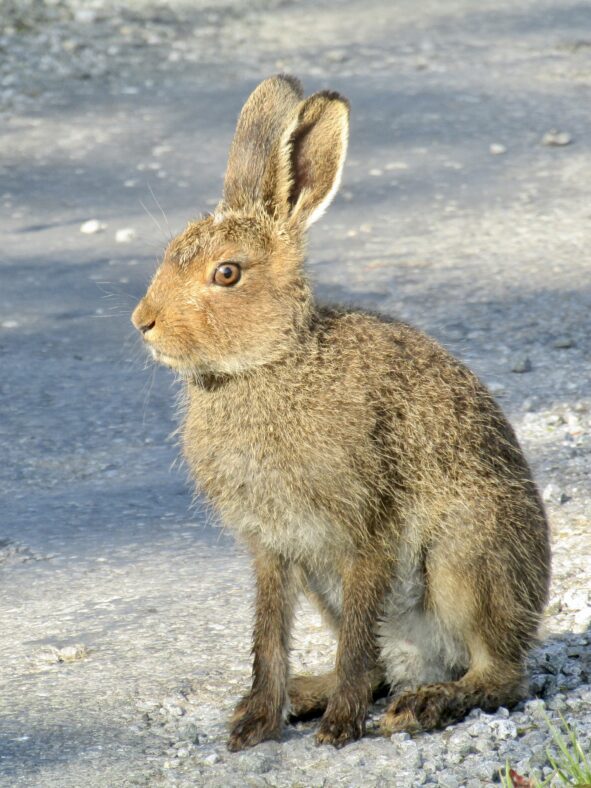
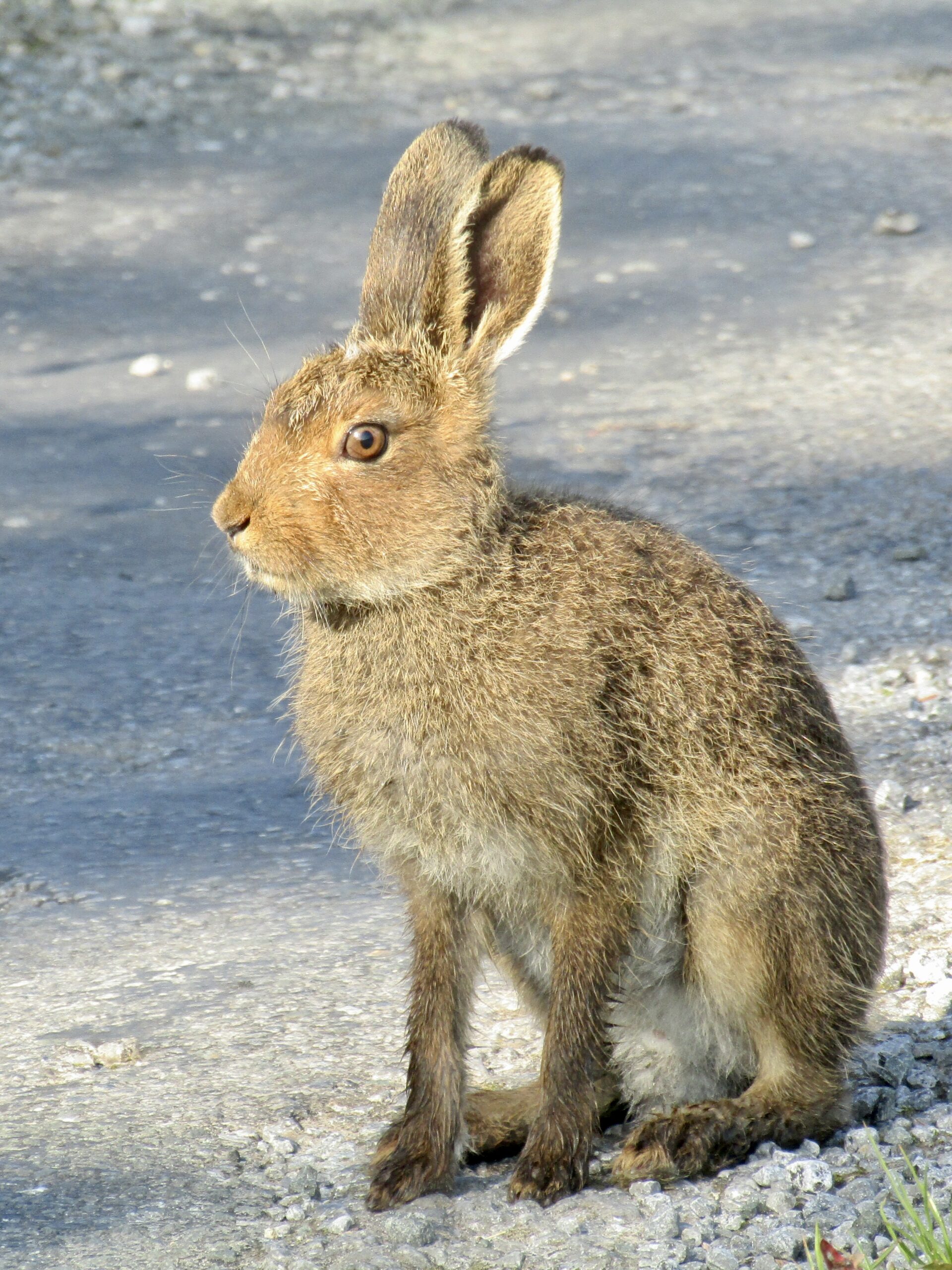
Few wild animals are as deeply woven into Ireland’s landscape and folklore as the Irish hare (Lepus timidus hibernicus). This remarkable creature has lived on our island for thousands of years and remains one of Ireland’s oldest native mammals.
Unlike rabbits, hares are solitary animals. They do not burrow underground but shelter in shallow grassy hollows known as “forms”. Their young, called leverets, are born fully furred and ready to fend for themselves almost immediately.
Chomh Mear le Giorria Márta – The March Hare
March is the month for which hares are best known. During the breeding season, males and females can often be seen “boxing” in open fields, sparring for dominance or courtship. It is this behaviour that gave rise to the well-known phrase “Mad as a March Hare” or, in Irish, “Chomh Mear le Giorria Márta.”
The Milk-Stealing Hare
In Irish folklore, hares were often believed to be witches in disguise. One tale tells of a farmer whose cows produced very little milk. Keeping watch one night, he saw a hare drinking from them. His dog chased the hare and wounded its hind leg. Later, when the farmer called to a nearby house, he found an old woman with the same injury and realised the hare had been her in disguise.
Stories of shape-shifting hares are found throughout Ireland and are also common in the folklore of Scotland, Wales and other parts of Europe. In Clifden ‘Cailleach na Luibhe’ or Wise Women of Clifden was set to turn herself into a hare. The Duchas Collection
Comhartha Báis – An Omen of Death
The hare was often regarded as a creature with connections to the Otherworld. In some traditions, an unexpected encounter with a hare was seen as a warning or omen.
Local stories from the Moycullen area tell of a man who became seriously ill while visiting relatives from America. At the moment he took ill, a hare is said to have appeared and sat on the windowsill of the house.
Another account recalls the death of a local man when seven hares were seen travelling along the lakeshore from Dereen. Reaching the house where the deceased lay, they stood briefly on their hind legs before disappearing. Versions of this story survive in local oral tradition to this day.
Creideadh go minic go raibh nasc ag an ngiorria leis an saol eile, agus i roinnt ceantar measadh gur comhartha báis é giorria a fheiceáil in áit nó ag am neamhghnách.
Putting the Hare out of the Corn
The hare also played an important role in harvest folklore. Traditionally, one sheaf of corn was left standing until the very end, as it was believed a hare was hiding within it. When the final sheaf was cut and the hare fled, it was known as “putting the hare out of the corn.”
The last farmer in a parish to finish harvesting was often teased and told, “We sent you the hare.”
In some versions of the tradition, the hare was associated with the Cailleach, the old hag of Irish folklore. It was said that she hid in the final sheaf and moved from farm to farm as the harvest progressed. For this reason, the last sheaf was often known as the Cailleach.
Chomh Sciobtha le Giorria – As Swift as a Hare
Irish proverbs celebrate the hare’s speed and sharp senses. The phrase “Codladh an Ghiorria” (the hare’s sleep) described someone who slept lightly, with one eye always open.
Another proverb claimed that the hare possessed three great qualities: cluas ghéar, súil gheal agus cos thapa — a keen ear, a bright eye and a swift run.
Other Hare Superstitions – Nósanna eile
No Comments
Add a comment about this page