
Currawatia
Information from Logainm.ie
Irish: An Chora Bháite
The Irish words cora coraidh, and corann translate to weir, stone-fence, or a ford in English.
This is a non-validated name: Placenames or geographical names for which provisional Irish forms have been recommended by the Placenames Branch on the basis of research but which are not specified in Placenames Orders in accordance with the Official Languages Act 2003.
Information from O’ Donnovan’s Field Name Books – (places.webworld.org database).
Irish: Coradh Bháidhte
English: Currawatia
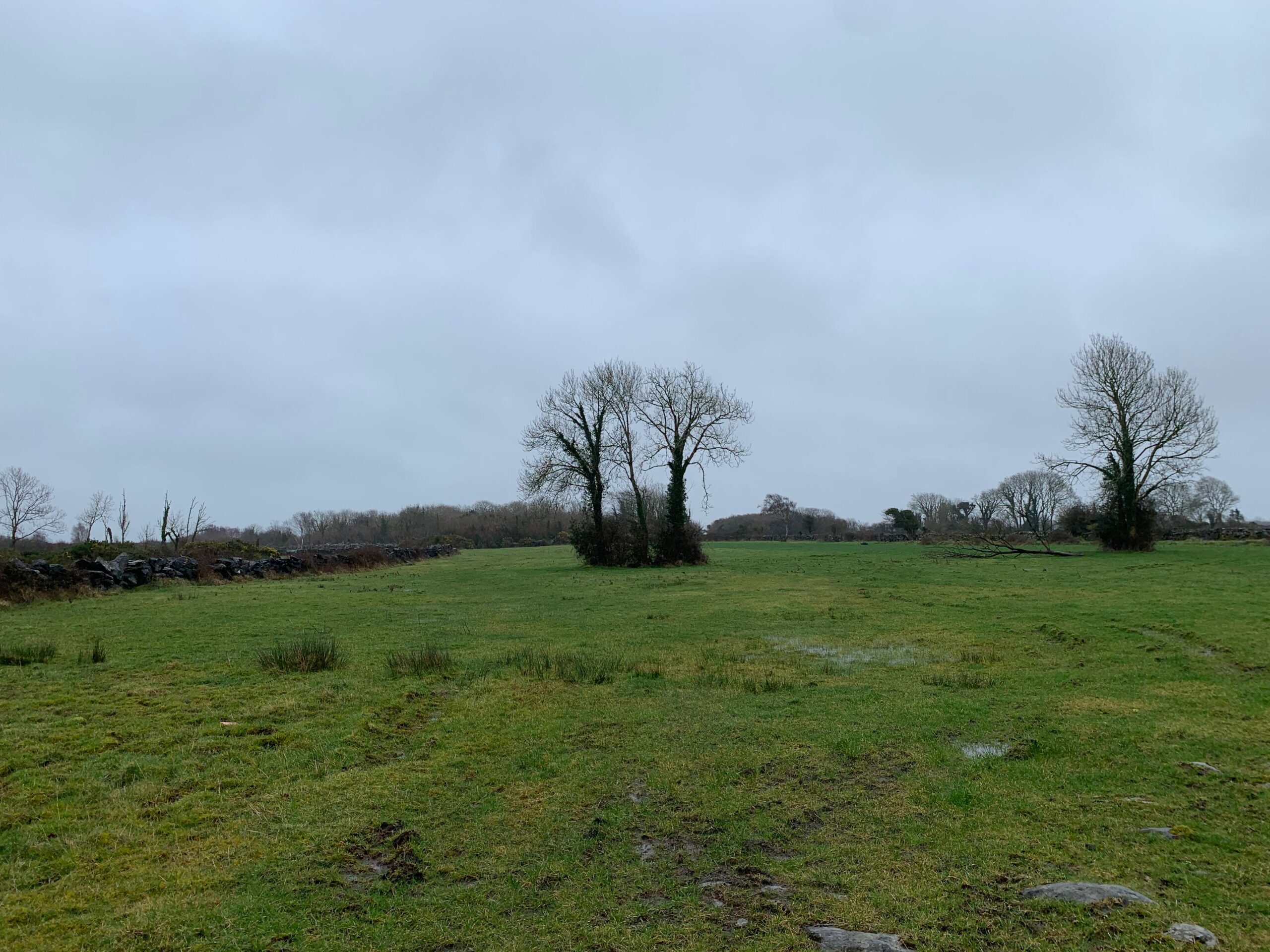
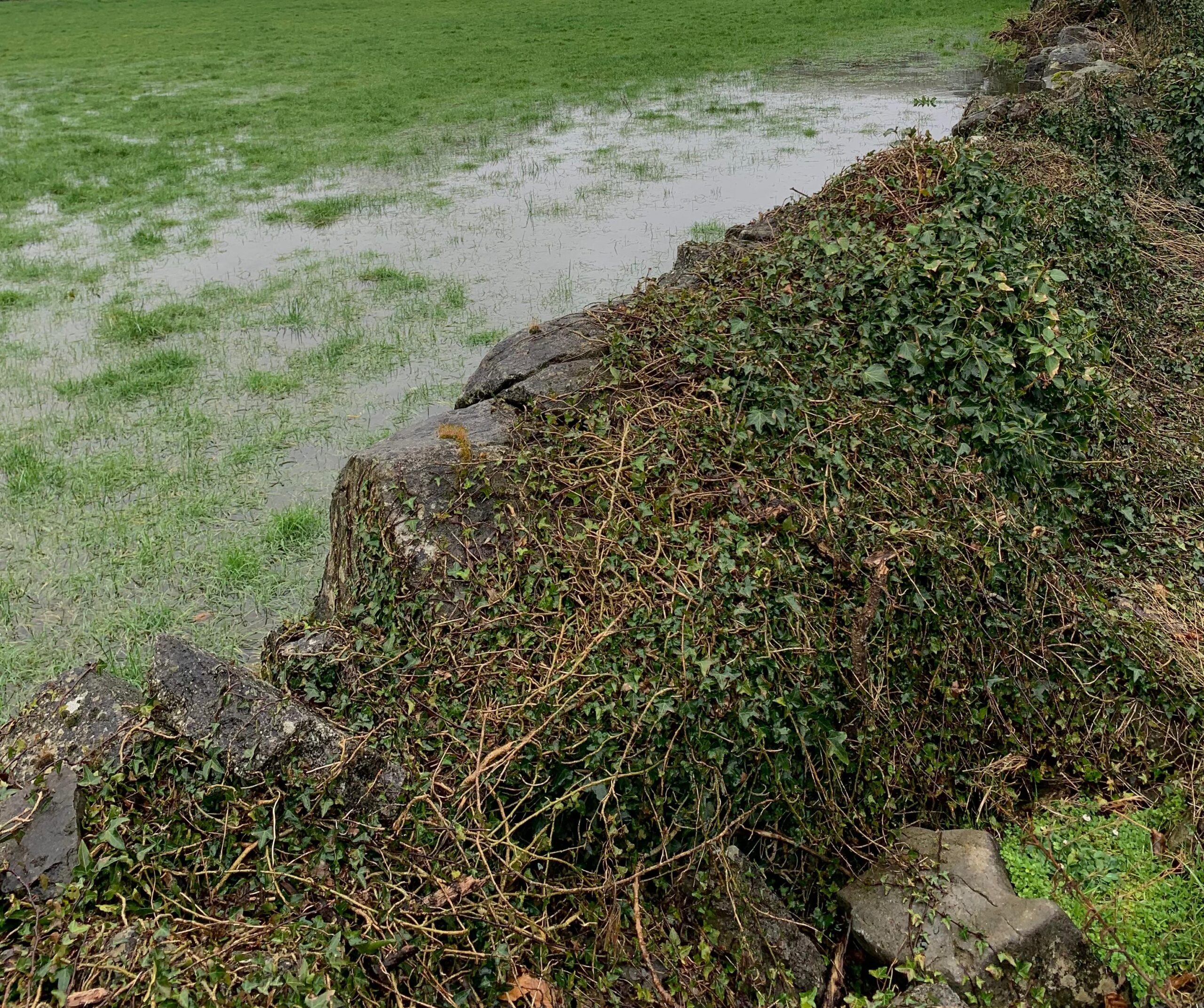
Meaning: The flooded morass. Baidhte means drowned literally, when applied to land it means covered with water.
Description: The greatest portion of this townland is in cultivation. There are some flooded parts along the south and northern boundaries together with the Corrib Islands, north of this townland. There is nothing more remarkable to be seen in it.
Situation: Currawattia is a townland in the civil parish of Moycullen, barony of Moycullen, County Galway. It is situated in the North East of the parish. The north and east boundaries are defined by Lough Corrib. Across the southern border is the townlands of Portdarragh and part of Cartoor. To the west is Tullokyne.
Information from Moycullen and its People
Irish: Currach Bháite – Is maigh leibhéalta íseal é currach nó corrach bháite, a bhíonn faoi uisce i rith an gheimhridh, nuair a ardaítear uiscí na Coiribe.
English: Currawatia – Currawatia’s name refers to a level, low-lying plain that is submerged during wintertime, when the waters of Lough Corrib rise.
Note: Other spellings of this townland name include but are not limited to: Currawattia, Currawathia, Carrawatia, Currawacler.
Griffith’s Valuations 1853-1855
Griffith’s valuation was a land and property survey conducted from 1847 to 1863. Its purpose was to determine taxes based on land value and soil quality. In the absence of most pre-20th Century census data, Griffith’s can provide crucial insight to those interested in genealogy. The survey was conducted in Moycullen from 1853 to 1855. Currawatia in Griffith’s valuation here.
James Madden (1a) had 73 acres and 3 roods valued at 20 pounds and 17 shillings. The lessor/landowner was Lord Campbell. James Madden’s holding had a House, offices, and land. The buildings were valued at 2 pounds, 100 shillings. In total the property was valued at 30 pounds, 7 shillings.
Margaret Swannick (1b) had zero acres, 1 rood and 20 poles or perches, valued at 4 shillings. The lesser/landowner was {sic} Michael Walsh and others,. Margaret Swannick’s holding had a House and garden valued at 2 shillings, total value of property was 6 shillings.
The second plot of land in Currawatia was leased by a group of many individuals (names on page one and page two). The land’s immediate lessor/landowner was also Lord Campbell. The plot was 48 acres, 2 roods, and 34 poles or perches, with no buildings. The renters and their valuation amounts were as follows:
Michael Walsh – 1 pound, 2 shillings
Thomas Walsh Jun., 7 shillings
James Walsh – 1 pound, 2 shillings
Richard Walsh – 1 pound, 2 shillings
Thomas Walsh – 1 pound, 2 shillings
Patrick Halloran – 15 shillings
Michael Coneely – 15 shillings
James Downes – 15 shillings
David Malia – 15 shillings£
Thomas Malia – 1 pound, 10 shillings
Margaret Coneely – 1 pound, 2 shillings
Myles Connors – 1 pound, 2 shillings
John Connell – 16 shillings
Bernard Connell – 1 pound, 2 shillings
Townland value: 122 acres, 3 roods, and 14 poles or perches
Total value: 43 pounds, 19 shillings.
The 1901 Census
According to the Enumerator’s abstract (Form N), Currawathia (spelling used on the 1901 Census) only had three buildings which were all inhabited houses. All are marked as single family homes. Everyone in Currawattia was Roman Catholic. There were nineteen people residing in the townland at the time of census collection; nine men and ten women. The Information on the House and Building Return (Form B1) was collected for all three households on the 1st of April, 1901. All the dwellings in Currawathia were built of stone or brick, with thatched roofs or other natural materials. According to the Out-Offices and Farm-Steadings Return (Form B2) there were nineteen additional structures in the townland used for storage and farming; the structures associated with each household will be elaborated on in the relevant writeup. Individuals recorded in each household (Form A information) for Currawathia {sic} slept or abode in this House on the night of Sunday, 31st of March, 1901. The Enumerator was Constable John Glynn.
Ellen Madden Household – Form A
Ellen Madden lived in House 1 in the townland of Carrawathia (spelling used on the 1901 Census) in the District Electoral Division of Tullokyne, County Galway. According to the House and Building Return (Form B1), the dwelling was a second-class house, made of stone or brick with a thatched roof, with four windows. The Out-Offices and Farm Steadings Return (Form B2) show the property also had two stables, two cow houses, a piggery, and a shed (see the change in buildings in the 1911 census). Ellen Madden was listed as the landholder.
The home was occupied by a multi-generational Roman Catholic family and one other individual. All occupants were born in County Galway.
Ellen Madden (61) was a widow at the time of the 1901 Census. Her occupation is stated as Farming {sic}. She could read and write and spoke both Irish and English.
Ellen’s son, James Madden (32) was living in his mother’s house in 1901 as was Ellen’s daughter in law, whose name is written as {sic} Margt (32). James’s occupation is listed as {sic} Farmer’s son. {Sic} Margt worked as a dressmaker. Both could read and write and spoke Irish and English.
James Madden and Mary (Margt) Connell married in 1892. Their marriage record can be found here. The birth record of their first daughter 1898 Margaret Christie
Three of Ellen’s grandchildren lived in House 1 at the time of the 1901 Census. Bridget (8), Helena (6), and Daniel (4). All three children could read, spoke English only, and are listed as not married. All three children are listed as {sic} Scholar, meaning they went to school.
John Molloy (16) was an occupant of House 1 at the time of census collection. He worked as a farm servant for Ellen Madden. He was Roman Catholic, could read and write, and spoke Irish and English. John was not married.
Thomas Walsh Household – Form A
Thomas Walsh lived in House 2 in the townland of Carrawathia (spelling used on the 1901 Census) in the District Electoral Division of Tullokyne, County Galway. According to the House and Building Return (Form B1), the dwelling was a second-class house, made of stone or brick with a thatched roof, with three windows. The Out-Offices and Farm Steadings Return (Form B2) show the property also had a stable, a cow house, a dairy, a piggery, a barn, and a shed. Thomas Walsh is listed as the landholder.
The home was occupied by a Roman Catholic family and one guest, all individuals were born in County Galway.
Thomas Walsh (35) was a Farmer. His wife, Margaret (24) is listed as a {sic} Farmer’s Wife. Both could read and write, and spoke Irish and English. Thomas and Margaret married 11th of October, 1897. Margaret’s maiden name was Reilly, and her residence at the time of marriage was Killagoola townland in the District Electoral Division of Slieveneena, Co. Galway (marriage record here).
Richard Walsh (28) was Thomas’s brother. He worked as a {sic} Farm Labourer. He could not read, spoke Irish and English, and was not married.
Thomas and Margaret had two children in 1901. Maryanne (3) and Delia (1). Both girls could not read. Their occupations were left blank, as well as their language proficiency. They were not married. Delia does not appear on the 1911 census in her father’s household. It would seem that she is the child who passed away between 1901 and 1911 (see 1911 information), but no birth or death records with the necessary amount of information has been found at this time.
Mary Reilly (12) was an occupant of House 2 at the time of census collection, She was listed as a visitor of Thomas Walsh. She was Roman Catholic, could read and write, and spoke both Irish and English. She was described as a Scholar {sic}, meaning she went to school. Mary was not married. A Mary Reilly matching her description does not appear in the Barony or Parish of Moycullen in 1911. No birth or death records with the necessary amount of information have been found at this time.
Peter Walsh Household – Form A
Peter Walsh and his family lived in House 3 of Currawathia (spelling used in the 1901 Census). According to the House and Building Return (Form B1), the dwelling was a second-class house, made of stone or brick with a thatched roof, with three windows. Peter was the landholder of his property at this time. According to the Out-Offices and Farm Steadings Return (Form B2) the property had gained and lost certain facilities between 1901 and 1911. In 1901, House 3 had a stable, two cow houses, piggery, barn, potato house, shed. Peter was reported as being able to read in 1901. Form A was signed for him by Constable John Glynn.
The home was occupied by a single extended family, all members of which were Roman Catholic and born in County Galway.
Peter Walsh (66) He was a married farmer who could read and spoke Irish and English.
The census shows Peter’s wife was Bridget Walsh (57). She has no occupation listed. She could not read and spoke Irish and English.
Two of the couple’s children, Thomas Walsh (36) and John Walsh (26) were living in their Father’s home in 1901 and 1911. Both of their occupations were Farmer’s Son {sic}. They could speak Irish and English. At the time of the 1901 Census, both sons were not married. Thomas was unable to read. John could read and write.
Hanoria Walsh (22) is not recorded as an occupant of her father’s home in 1911. Her occupation is listed as Farmer’s Daughter {sic}. She could read and write, spoke Irish and English, and was not married.
The birth record for Honor {sic} (Hanoria) Walsh contains relevant information. She was born May 28, 1879 in Currawata. Her mother Bridget’s maiden name is Burke.
David Moloney (3) was the grandson of Peter Walsh. He could not read, his occupation and language proficiency were left blank, and he was unmarried. It is unclear from the census who his mother or father was.
Further records reveal the relationship between David Moloney and Peter Walsh. The birth record of David Mulloney {‘sic} shows he was born 27th December, 1897 in Oughterard, townland of Moyvoon. His mother was Peter and Bridget’s daughter, Bridget Walsh, who married Patrick Moloney 21st September, 1896 (marriage record here). {Sic} Pat Mulloney {sic} died 12th October, 1898 in the townland in Moyvoon (death record here). Bridget Walsh remarried 30th October 1899, in the registrar’s district of Oughterard. Her second husband was Martin Faherty (marriage record here).
Bridget Walsh and Martin Faherty appear in the townland of Moyvoon East (also in Oughterard) in the 1901 Census, while David lived with his grandfather. The couple had a second child, Mary, who was eight months at the time of census collection.
In the 1911 Census, David (13) is a resident in his mother and step-father’s dwelling in Moyvoon East. He is listed as a scholar, meaning he attended school. He could read and write, and spoke Irish and English.
Martin Faherty (48) was a farmer. Bridget (45) has no occupation listed. They could both read and write and spoke Irish and English. The couple reported being married eleven years. Bridget had given birth to four children, three of which were still living. David’s three living step-siblings were Mary (10), Peter (6) and Timothy (5). They were all born in County Galway and spoke both Irish and English. Mary and Peter could read and write and were listed as scholars, meaning they attended school. Timothy has no occupation listed, and could not read.
David and the Faherty’s lived in house 5 of the townland Moyvoon East in the District Electoral Division of Oughterard, County Galway. See the House and Building Return (Form B1) and the Out-Offices and Farm-Steadings return (Form B2) for further details about their lives.
The 1911 Census
According to the Enumerator’s abstract (Form N), Currawattia (spelling used on the 1911 Census) had three buildings which were all inhabited houses. All are marked as single family homes. Everyone in Currawattia was Roman Catholic. There were twenty-one people residing in the townland at the time of census collection; thirteen men and eight women. According to the House and Building Return (Form B1), the dwellings in this townland were second-class houses, made of stone or brick with thatched roofs. According to the Out-Offices and Farm-Steadings Return (Form B2 pg. 2) there were twenty-three additional structures in the townland used for storage and farming; the structures associated with each household will be elaborated on in the relevant writeup. Interestingly, the Enumerator’s Abstract was signed by Constable Michael Lyster on the 25th of April, 1911. Individuals recorded in each household (Form A information) for Currawattia {sic} slept or abode in this House on the night of Sunday, 2nd of April, 1911. Const. Lyster used dashes in nearly every column he did not fill in. However, the Column {sic} Information Refused was left blank for both Males {sic} and Females {sic} who resided in House 2.
Ellen Madden Household – Form A
Ellen Madden lived in House 1 in the townland of Currawattia (spelling used on the 1911 Census) in the District Electoral Division of Tullokyne, County Galway. According to the House and Building Return (Form B1), the dwelling was a second-class house, made of stone or brick with a thatched roof. With five rooms and four front windows, this was a standard, if not elevated dwelling found in rural Moycullen at the time.The Out-Offices and Farm Steadings Return (Form B2) show the property also had a stable, a coach house, cow and calf houses, a piggery, a fowl house, a barn, and a shed.
The home was occupied by a multi-generation Roman Catholic family. All members of whom were born in County Galway, and were able to read and write, and spoke both Irish and English.
Ellen Madden (72) was a Farmer and a widow. James Madden (44) was Ellen’s son. His occupation is listed as a {sic} Farmer’s son. His wife, Mary Anne (44), has no occupation listed. The couple reported being married for 19 years as of 1911. Mary Anne gave birth to five children, three of whom were still alive at the time of census collection. These details were supposed to be recorded in the wife’s column, but the census taker filled it out in James’s column instead.
The three living Madden children who lived in House 1 were Bridget Mary (18), Lena (17), and Daniel (14). They are all listed as single. In Bridget Mary’s occupation column, something was written and erased. It is now illegible. Lena and Daniel are both listed as {sic} Scholar, meaning they attended school.
The householder recorded on the House and Building Return was Ellen Madden, and she was the landholder as well. The census return for the household was collected on 5th April, 1911.
Peter Walsh Household – Form A
Peter Walsh lived in House 2 in the townland of Currawattia (spelling used on the 1911 Census) in the District Electoral Division of Tullokyne, County Galway. According to the House and Building Return (Form B1), the dwelling was a second-class house, made of stone or brick with a thatched roof. With three rooms and three front windows, this was a standard dwelling found in rural Moycullen at the time. The Out-Offices and Farm Steadings Return (Form B2) show the property also had a stable, a coach house, cow and calf houses, a piggery, a fowl house, and a barn.
The home was occupied by a multi-generation Roman Catholic family, all members of which were born in County Galway.
Peter Walsh (75) was a Farmer and a listed widower, meaning Bridget passed sometime between 1901 and 1911. He could not read or write and spoke both Irish and English. Peter’s signature was written for him on the census declaration (Form A) by Constable Michael Lyster, acting as witness and census taker.
Thomas Walsh (46) was Peter’s son. His occupation is listed as a {sic} Farmer’s Son. He was single, spoke both Irish and English, and could not read or write. Thomas was listed as blind on this census.
John Walsh (36) was Peter’s son. His occupation was also as a {sic} Farmer’s Son. John’s wife, Julia (30) has no occupation listed. The couple reported being married for ten years and had four children at the time of census collection. Both John and Julia could read and write and spoke Irish and English.
John and Julia’s children were all listed as single. Peter (8) and William (6) are both listed as {sic} Scholar, meaning they attended school. They both spoke Irish and English, but only Peter could read and write. William could not write. John (4) and Myles (2) could not read or write. Both boys’ language proficiency is unclear.
The householder recorded on the House and Building Return was Peter Walsh (spelled Walshe on Form B1) and he was the landholder as well. The census return for the household was collected on 5th April, 1911.
Thomas Walsh Household – Form A
Thomas Walsh lived in House 3 in the townland of Currawattia (spelling used on the 1911 Census) in the District Electoral Division of Tullokyne, County Galway. According to the House and Building Return (Form B1), the dwelling was a second-class house, made of stone or brick with a thatched roof. With three rooms and three front windows, this was a standard dwelling found in rural Moycullen at the time.The Out-Offices and Farm Steadings Return (Form B2) shows the property also had a stable, a coach house, cow and calf houses, a piggery, a fowl house, a barn, and a shed.
The home was occupied by a single Roman Catholic family, all members of which were born in County Galway.
Thomas Walsh (48) was a Farmer. His wife, Maggie (32), has no occupation listed. The couple reported having been married 13 years. Maggie had given birth to six children, five of which were still alive at the time of census collection. Both Thomas and Maggie could read and write and spoke both Irish and English.
All five of the living Walsh children lived in House 3, and all are listed as single. Mary Annie (12), Saraha {sic} (9), James (7), and John (5) are all listed as {sic} Scholar, meaning they attended school. They all spoke Irish and English. While the three oldest could read and write, John and Michael (3) were unable to read or write. Michael could only speak English.
The householder recorded on the House and Building Return was Thomas Walsh (spelled Walshe in one column on Form B1) and he was the landholder as well. The census return for the household was collected on 5th April, 1911.
No Comments
Add a comment about this page