
Moycullen's Core Truths
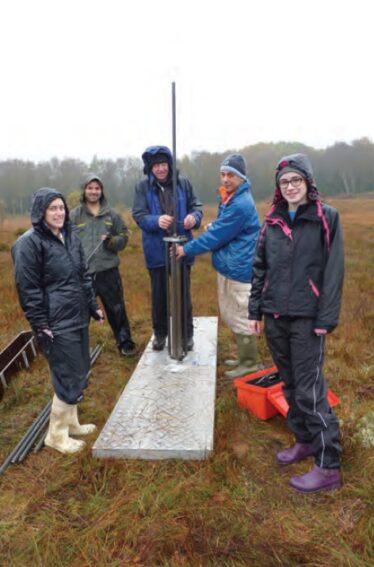
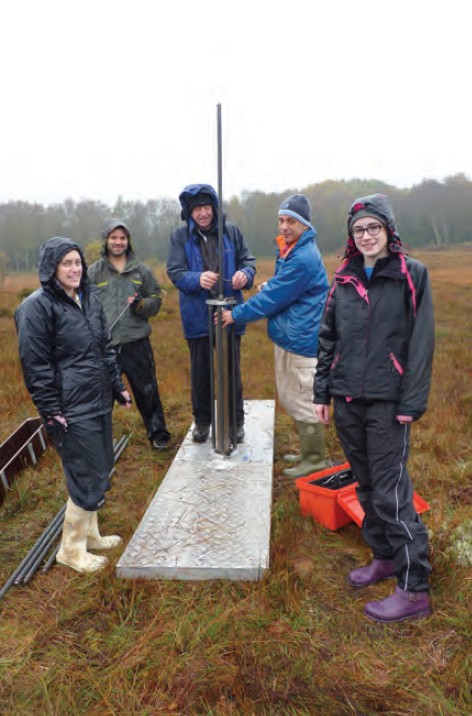
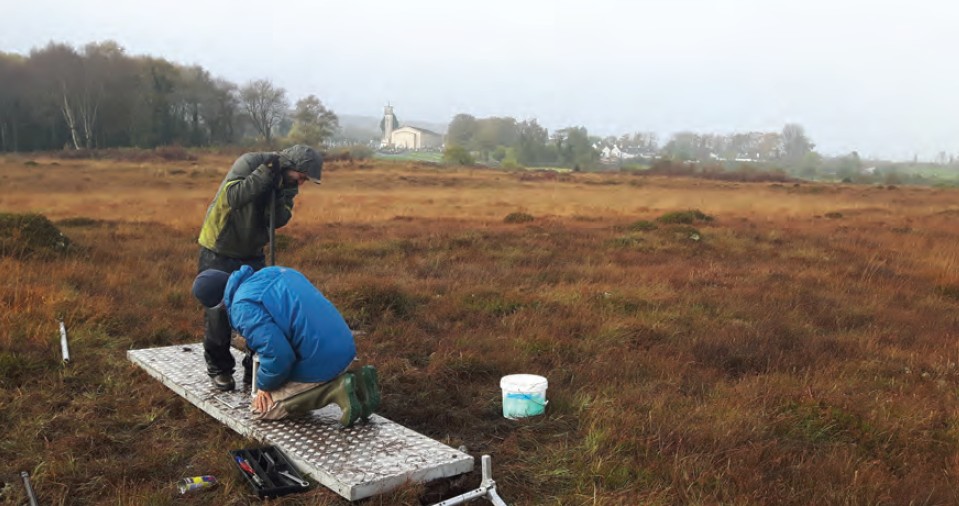
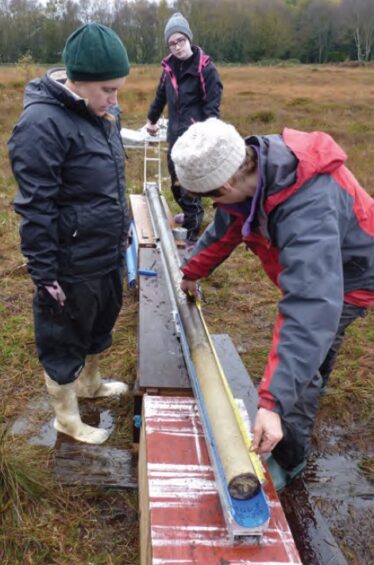
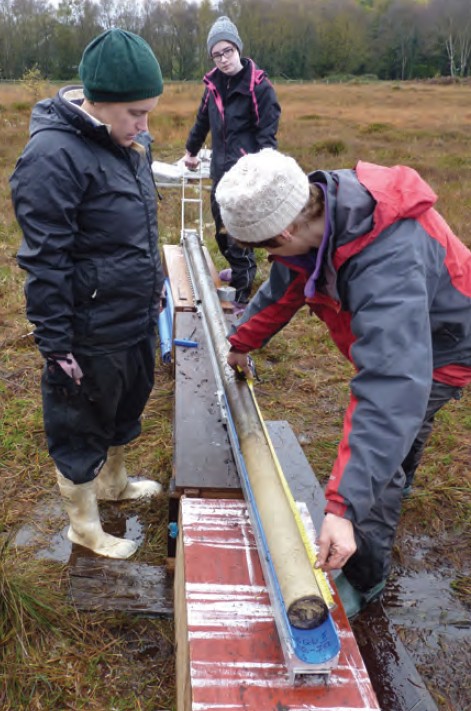
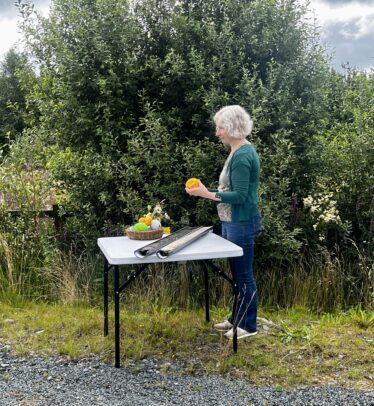
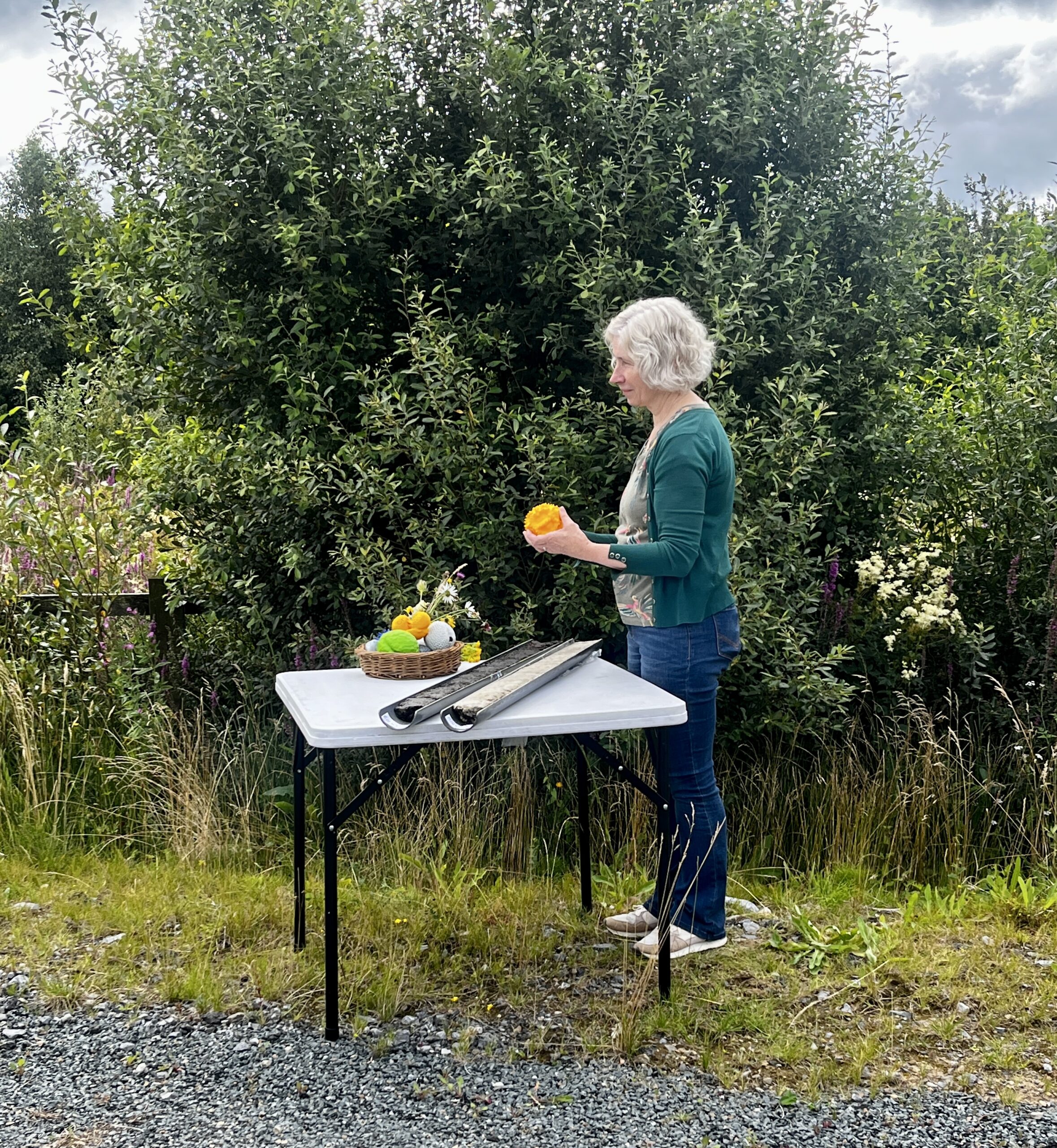
Before building of the Moycullen Bypass, the Paleoenvironmental Research Unit from University of Galway took a peat core sample along the N59 route at Ballyquirke West . Detailed analysis of fossil pollen within this core provided a continuous environmental record from the postglacial period to the present day.
The pollen data revealed a recurring pattern of woodland clearance, the introduction and expansion of cereal cultivation, and subsequent phases of natural woodland regeneration. These cycles began in the Neolithic period and were influenced by a combination of human settlement patterns, agricultural innovations, and broader climatic fluctuations. Analysis showed this site was originally a shallow lake which gradually infilled to become a fen and eventually a western raised bog.
Radiocarbon dating shows human activity in the area from c. 3700–3500 BC (Neolithic farming), through c. 1500–800 BC (Bronze Age cooking sites), early medieval occupation (c. 700–1200 AD), later medieval land use changes, and into modern recovery.
From this fossil pollen, vegetation change and land-use history over nearly 10,000 years shows:-
Early Postglacial Environment (c. 9500–8400 BC)
- Landscape was open with pioneer species like birch, willow, and grasses.
- Gradual spread of pine and hazel as climate warmed after the last Ice Age.
Early–Mid Holocene Woodland Expansion (c. 8400–3800 BC)
- Dense mixed woodlands of pine, oak, elm, and hazel, with alder in wetter zones.
- Minimal human influence; little sign of clearance or cultivation.
Neolithic Woodland Clearance and Farming (c. 3800–2285 BC)
- First large-scale human impact: elm decline (disease or clearance).
- Micro-charcoal suggests burning for land clearance.
- Cereal pollen marks the start of agriculture; hazel likely managed for food and wood.
Early–Middle Bronze Age Renewed Farming (c. 2430–1310 BC)
- Widespread woodland clearance, increased grassland and herbaceous cover.
- Fire used to manage land; alder wetlands reduced.
Later Bronze Age Decline in Activity (after c. 1310 BC)
- Partial woodland recovery, perhaps due to depopulation or shifting settlement.
Iron Age & Early Medieval Changes
- Renewed clearance and agriculture; cereals reappear.
- Evidence for pastoral farming and structured fields.
Late Medieval–Post-Medieval Period
- Extensive clearance for pasture.
- Pollen dominated by grass species, indicating heavy grazing pressure.
A more detailed account of the Ballyquirke core sample can be found in Chapter 3 of the publication
A Moycullen Miscellany. Transport Infrastructure Ireland have made available a FREE downloadable version of the now out of print book.
Moycullen Heritage extend their gratitude to Dr. Karen Molloy of the Paleoenvironmental Research Unit University of Galway, to TII Archaeologist Jerry O’Sullivan and to landowner James Regan for their input, guidance and support during this collaborative project with the Natural History Museum of Ireland.
No Comments
Add a comment about this page