
Where do the stones originate?


Where do the stones originate?
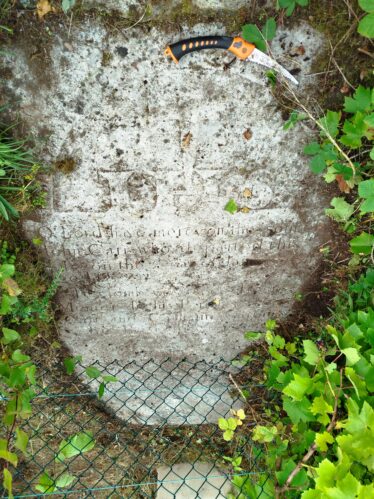
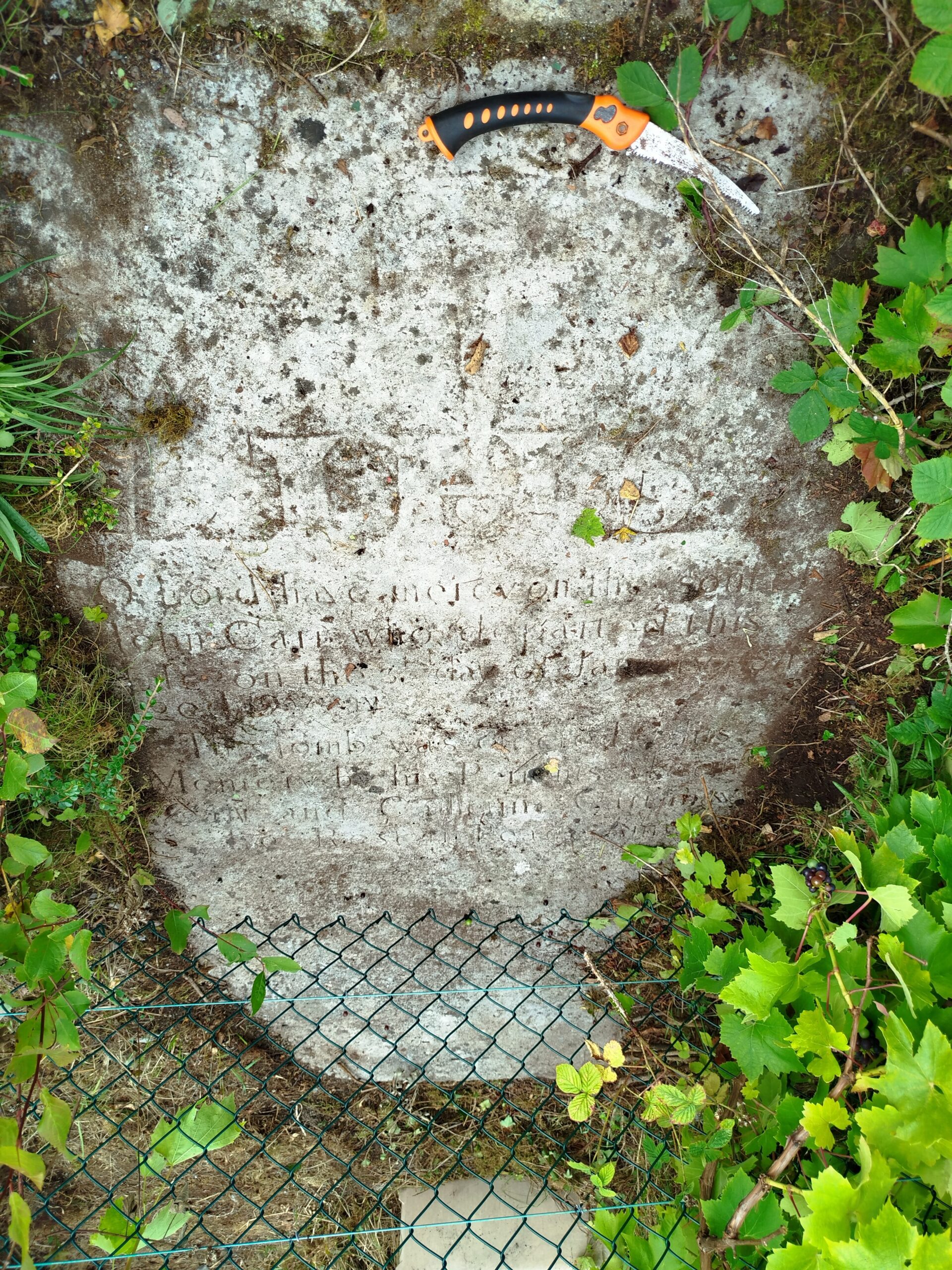
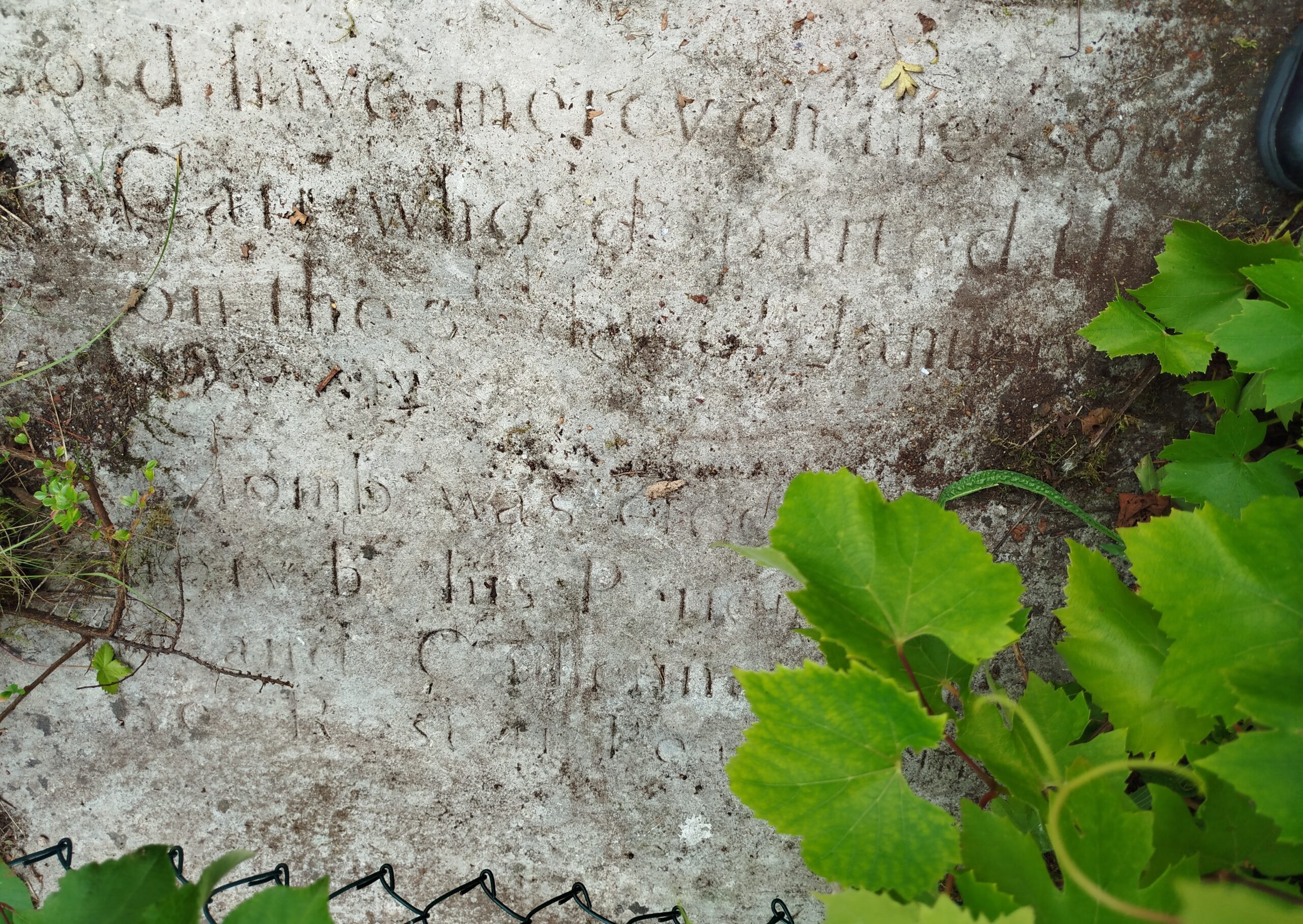
Whilst carrying out the gravestone recordings of tSean Relig the question arose as to where the grave slabs would have been sourced; many were several feet in length and in width.
All of the stones were limestone.
Angliham Quarry perhaps?
Tom Kenny wrote
‘There were black limestone quarries in Menlo and Angliham; a limestone quarry at Merlin Park worked by the Blake family there until about 1850 and later by Sibthorpes of Dublin; In about 1880, a Scotsman named Millar rented a number of quarries in the Galway area, two at Shantalla, one at Ballagh near Bushy Park and one at St. Helen’s, Taylors Hill where they quarried fine-grained red granite. There was a Marble and Granite works at Earl’s Island where one of the employees was a stonemason named Pat Fahy’.
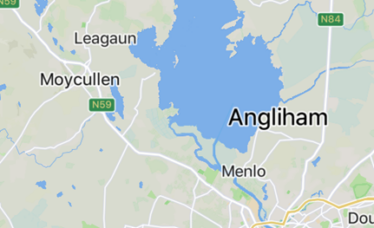
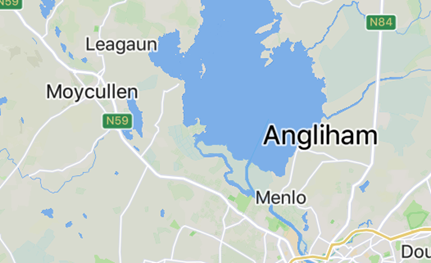
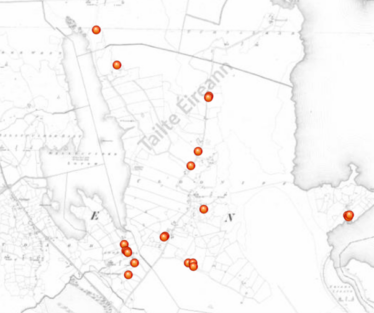
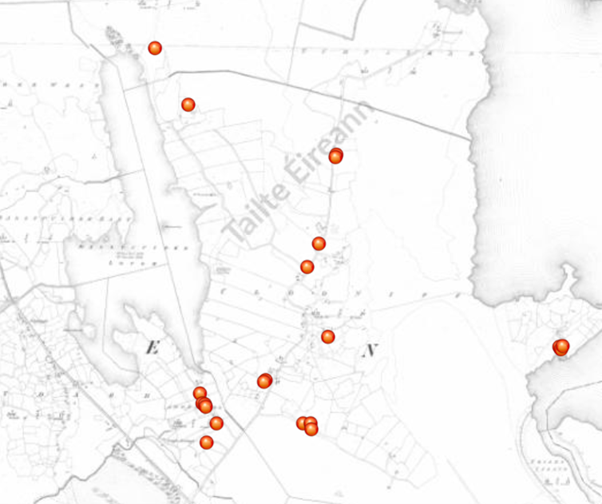
It is possible that the limestone slabs were sourced at Angliham as it would have been a short journey across the Corrib (see map). Also, the fact that the quarries were worked by the Blake family and Moycullen Parish priest around this time was Fr. Francis Xavier Blake (1786 to 1828) would have made obvious connections for a gravestone source.
Blake, Francis Xavier – Moycullen Heritage
Galway National Park City site states that
‘Tradition has it that the quarry was opened by the Franciscan Order to obtain building stone for churches. It is also believed that the ‘Friars Cut’, linking Lough Corrib with the River Corrib, was the work of the Franciscans who needed a convenient way to transport the stone from the quarry to the city and Galway port. Stone from the quarry is said to have been shipped as far as South America to create imposing fireplaces in big houses. It was also used as altar stones.’
…or maybe the Clooniff shores of Ballyquirke Lake.
Ballyquirke lake shoreline in Clooniff townland could also have been another source for the stone slabs. There is a story about a local stonemason called Loftus, working around the lake shore. This information came to light when in the late 1960’s a site was being cleared for a house and a fully engraved grave slab was uncovered. The inscription dated the slab to 1871.
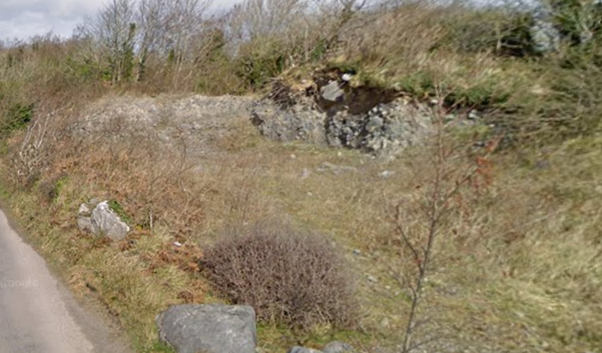
Clooniff townland has an obvious historical quarry (see photograph) and there were several lime kilns located in the townland (see map) which indicates that Clooniff would have been a good source of limestone.
According to Transport Infrastructure Ireland ‘Limekilns are the most widely distributed and numerous industrial site-type in the Irish landscape. They are depicted on 19th-century Ordnance Survey (OS) maps as a small circle with a darkened portion defining the stoke-hole, but are generally not named. A cursory survey of first- and second-edition OS six-inch maps reveals a widespread distribution of limekilns throughout rural Ireland’.
Today, according to the Health and Safety Authority, ‘limestone is the most commonly extracted mineral although other types of rock and aggregates are produced. Over 2 million tonnes of finely crushed limestone is used each year to improve lime-deficient soils in many parts of Ireland’ (Galway National Park City). In the past limestone would have been used to whitewash houses, as disinfectant, and to make quicklime.
Stones with fossils in the community
The brachiopod fossil was found at the Sean Relig location but other fossils were found around the community, for example, Ballyquirke Lakeshore, Gortnadarragh, Stonepark, Drimcong House, Deerpark, and Wildlands. The saying ‘it is easier to borrow stone than cut stone’ indicates that many stones may have started their life in one place or on one construction to find it being used in another. Newgrange in Co Meath would be a good example of this where some of the white quartz, originally used on the façade of Newgrange itself, is seen in the field walls. Here in Maigh Cuilinn, it is said, the stone from Moycullen Castle has been used in other places too.
In conclusion then, it may be said that regarding the tracked fossils within the community one cannot say definitively where the stones were originally sourced.
No Comments
Add a comment about this page