
Funeral Fossils - The Ballycarty Brachipods
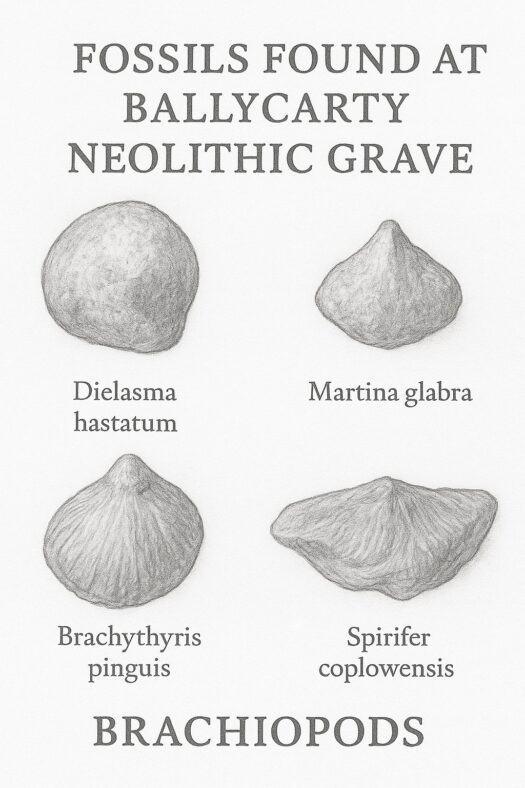
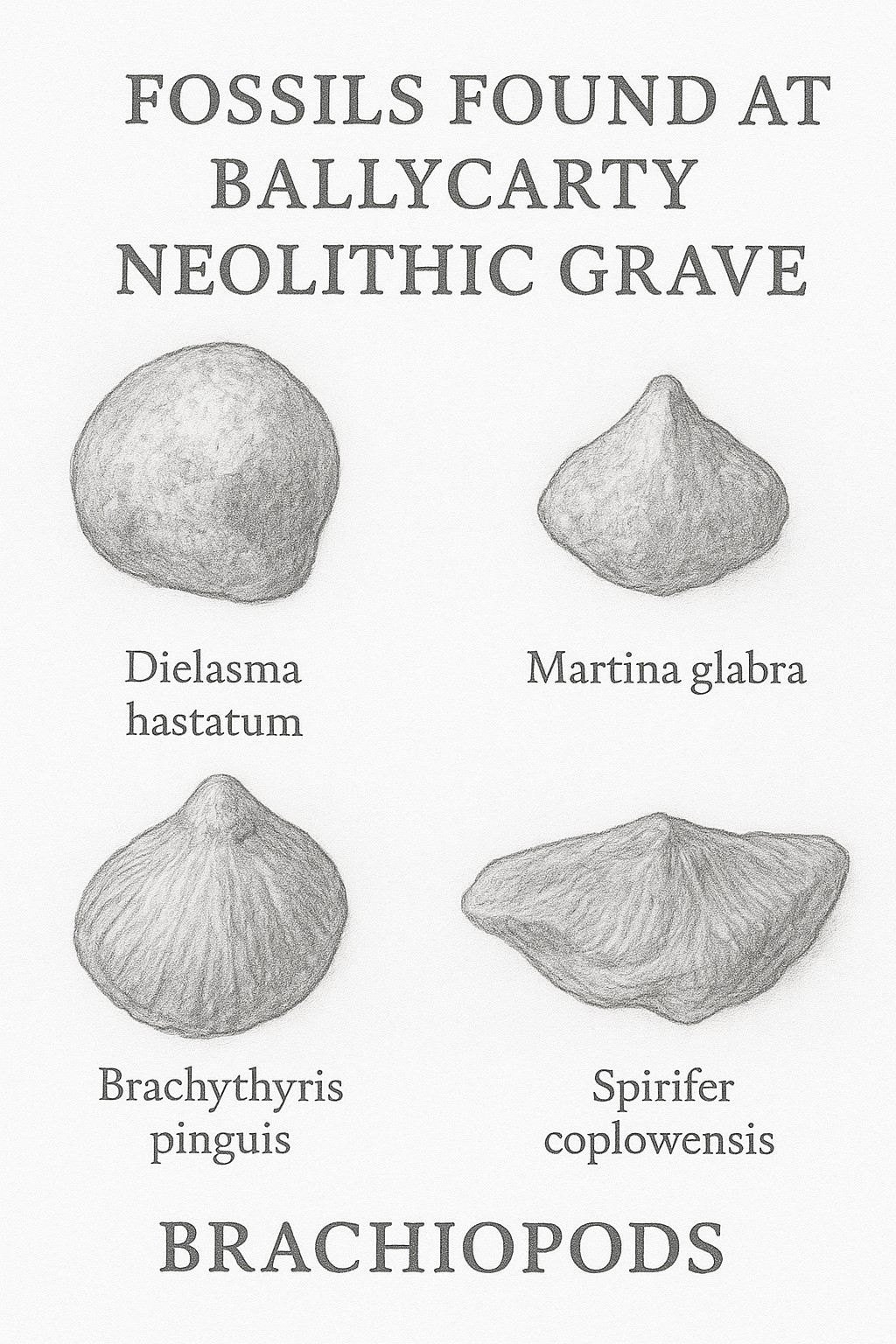
While our fossils here in Maigh Cuilinn are on the graveslabs and in other places in the community, they held extra significance at a Neolithic Site in Co. Kerry.
Archaeological excavations carried out during roadworks often reveal surprising insights into past life. For example, fossil pollen uncovered during bypass works in Moycullen revealed much about early settlement, while excavations near Tralee, County Kerry, uncovered remarkable finds during preparation for the N22 Tralee bypass.
In 1996, archaeologists near Tralee, County Kerry, uncovered a Neolithic passage tomb at Ballycarty that held an extraordinary find: fossils deliberately placed with the dead. These included brachiopods, easily recognized by their symmetrical shells, along with crinoid stem fragments, coiled and straight-shelled cephalopods, gastropods, and pieces of bryozoans. Collected from the fossil-rich Waulsortian limestone around the site, they were possibly chosen for their distinctive shapes and textures.
Dating to 3000–2500 BC, this is the oldest known example of fossils being used in funerary practices in Ireland or Britain. The fossils were not accidental inclusions from the building stone but appeared to be gathered intentionally and placed in both the burial chamber and cairn fill. Although we cannot know exactly what these early people believed about them, it is clear that they recognised their unique features and considered them valuable. Most likely, the fossils served as ceremonial decorations, ornaments, or charms to perhaps accompany the dead into the afterlife.
The Ballycarty tomb connects to a wider story found across cultures. In Bronze Age England, at Dunstable Downs, nearly 100 fossil sea urchins were arranged around a burial. In County Mayo, a fossil coral was used as an amulet in a cist grave. Native American groups in Utah made pendants from trilobites, and in Moravia, fossil shells were strung into necklaces more than 25,000 years ago.
Interestingly, the limestones at Brú na Bóinne are also rich in fossils, and it has been suggested that these may have inspired the artists to create the spirals and other motifs carved into the tombs rather than interring them such as at Ballycarty.
These discoveries show a long human fascination with fossils. People across time and continents recognised them as special objects that were ancient and mysterious. For the Neolithic builders at Ballycarty, as for many others, fossils were more than stone. This makes it all the more unusual that there is so little recorded folklore material about fossils in this country.
References
Wyse Jackson, Patrick, and Michael Connolly. “Fossils as Neolithic Funereal Adornments in County Kerry, South-West Ireland.” Geology Today 18, no. 4 (2003): 139–43. https://doi.org/10.1046/j.0266-6979.2003.00355.x
McNamara, Kenneth. Dragons’ Teeth and Thunderstones: The Quest for the Meaning of Fossils. 1st ed. London: Reaktion Books, 2020.
No Comments
Add a comment about this page