
Fossils to Flying Feasts
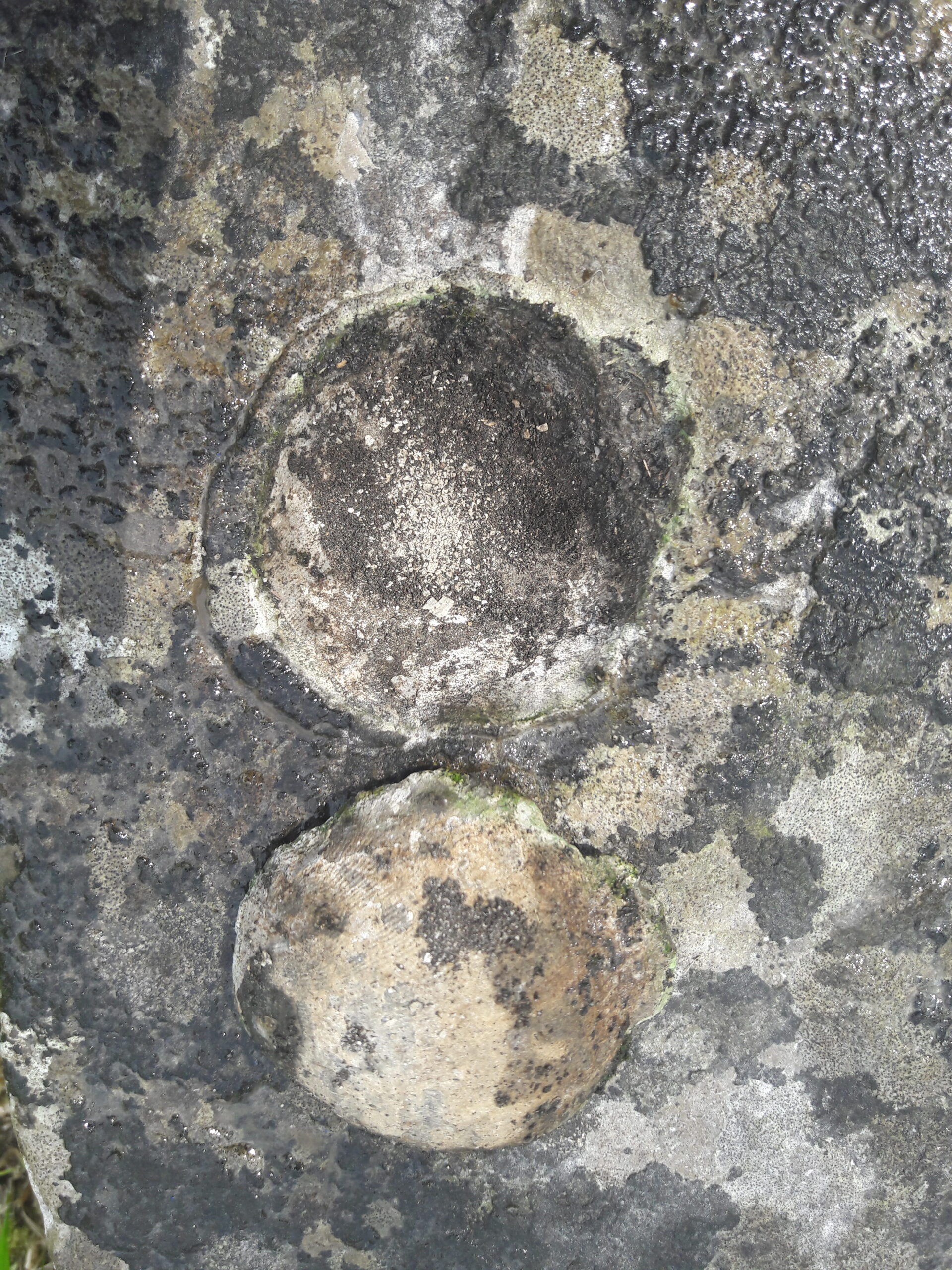
Strange hollows and indentations in the crags—formed by weathering and by fossils—were long thought to be the marks of miraculous events. Although I have found no recorded stories of fossils here in Maigh Cuilinn, when Mary O’ Shea took a trip to the Burren, she was told the story of Bóthar na Mias when she asked about fossil folklore in the area.
In Clare, fossil marks (possibly the indents of brachiopods) in the limestone gave rise to one of the Burren legends: the story of Bothar na Mias, the “road of the dishes.” Thomas J Westrop collected this in ‘A Folklore Survey of County Clare and it featured in a chapter about Rock Caves & Stones.
Near the hermitage of St. Colman MacDuach, brother of King Guaire “the Hospitable” of Hy Fiachrach Aidhne, such dish-shaped hollows (similiar to the Brachipod Socket in the graveslab in MaighCuilinn) gave their name to Bothar na Mias.
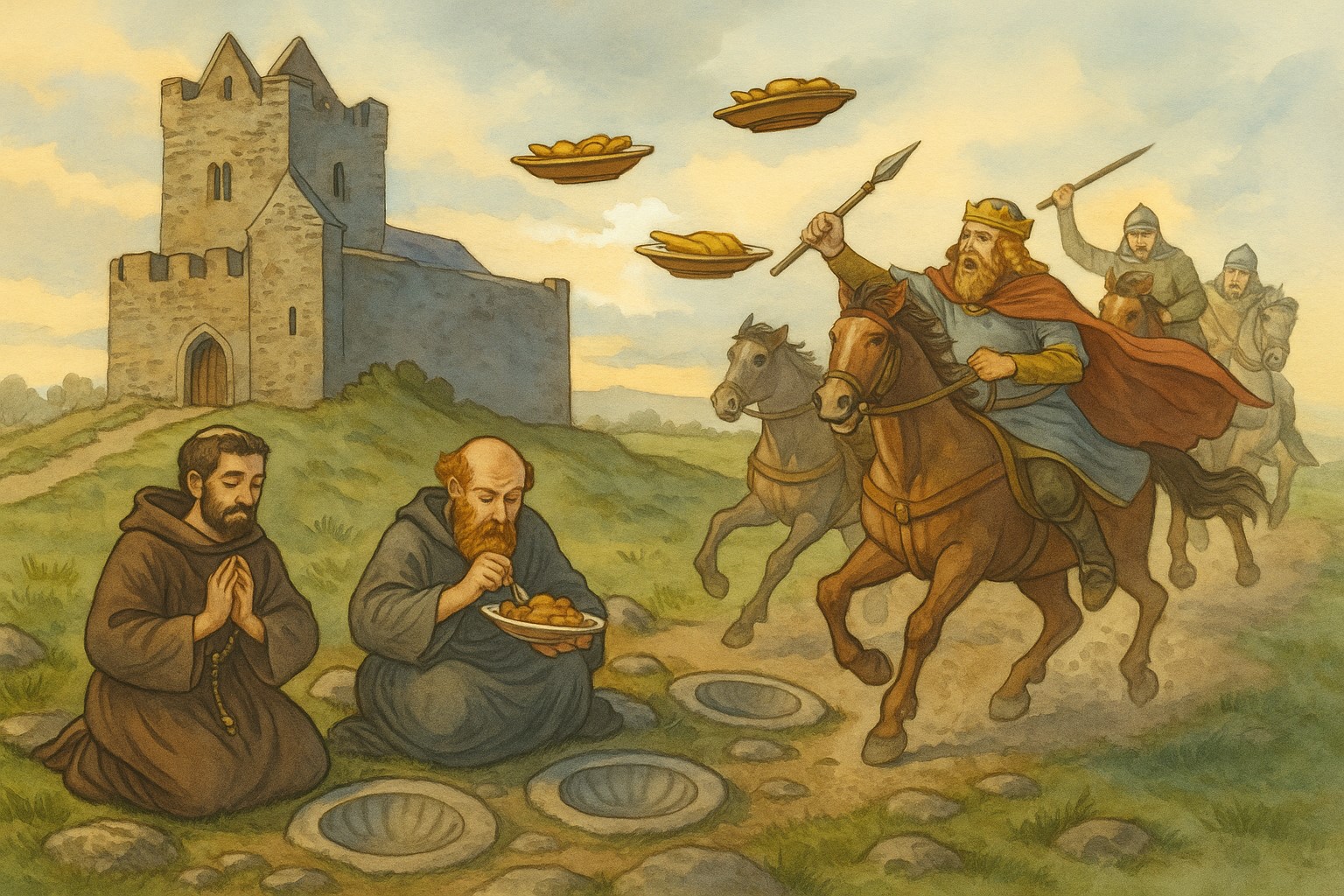
According to legend, one Easter Sunday in the early 7th century, St. Colman prayed for food for his companion, and King Guaire’s feast rose into the air, flying across the landscape to the hermitage. The astonished king and his court mounted their horses to pursue the dishes, but when they reached the spot, their feet and the hooves of their horses became stuck fast in the rock. The road where the feast descended is remembered as Bothar na Mias—the road of the dishes.
No Comments
Add a comment about this page