
Mile Marker 112
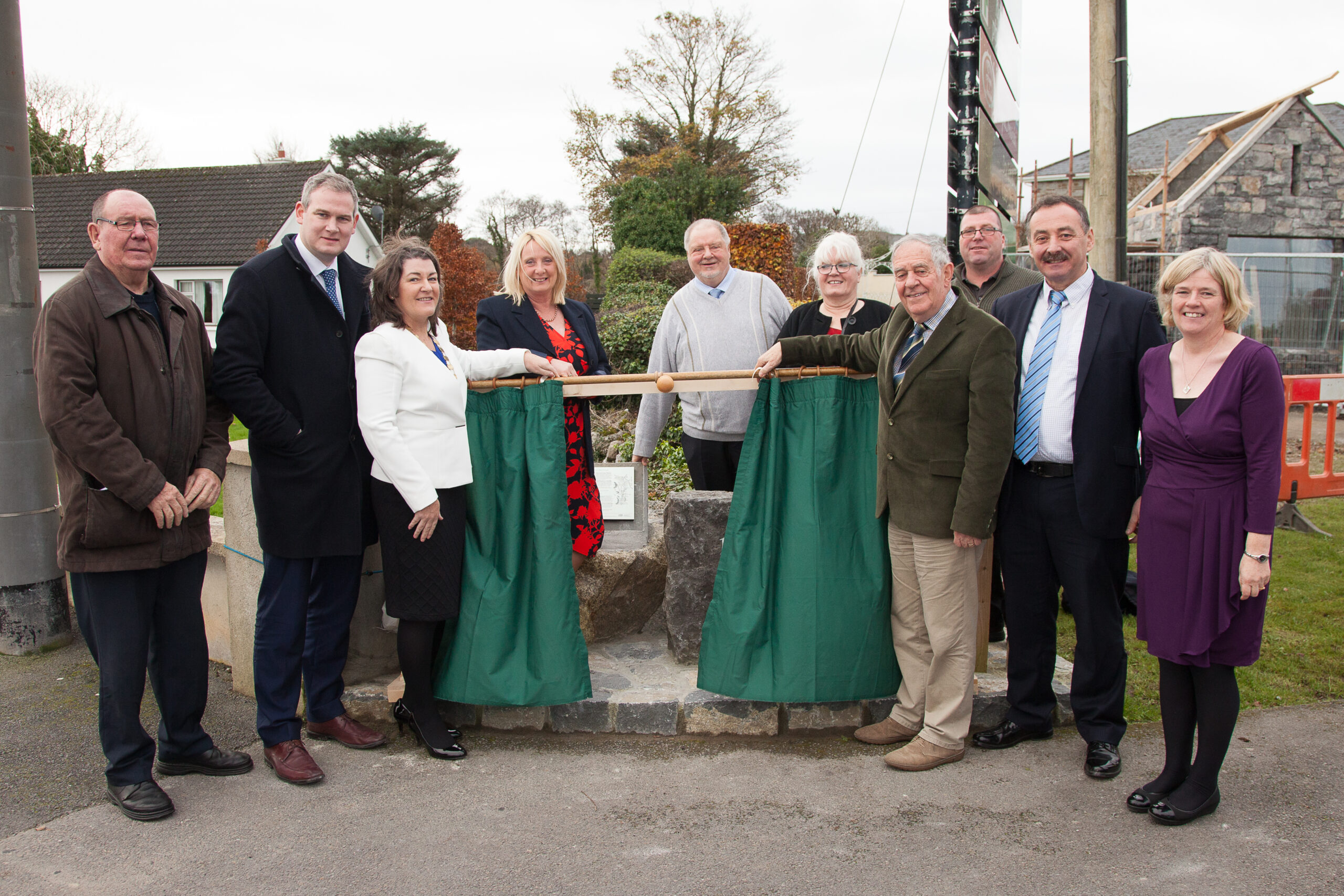
Back Row are Moycullen Heritage's Hazel Morrison, Tomas O'Cadhain, Mary O'Shea and Richard Long. Front Row: Cllr. Tomás Ó Curraoin, Minister of State Sean Kyne TD, County Cathoirleach Eileen Mannion, Author & Historian Peadar O'Dowd, Cllr. Séamus Walsh and Heritage officer for County Galway Marie Mannion.
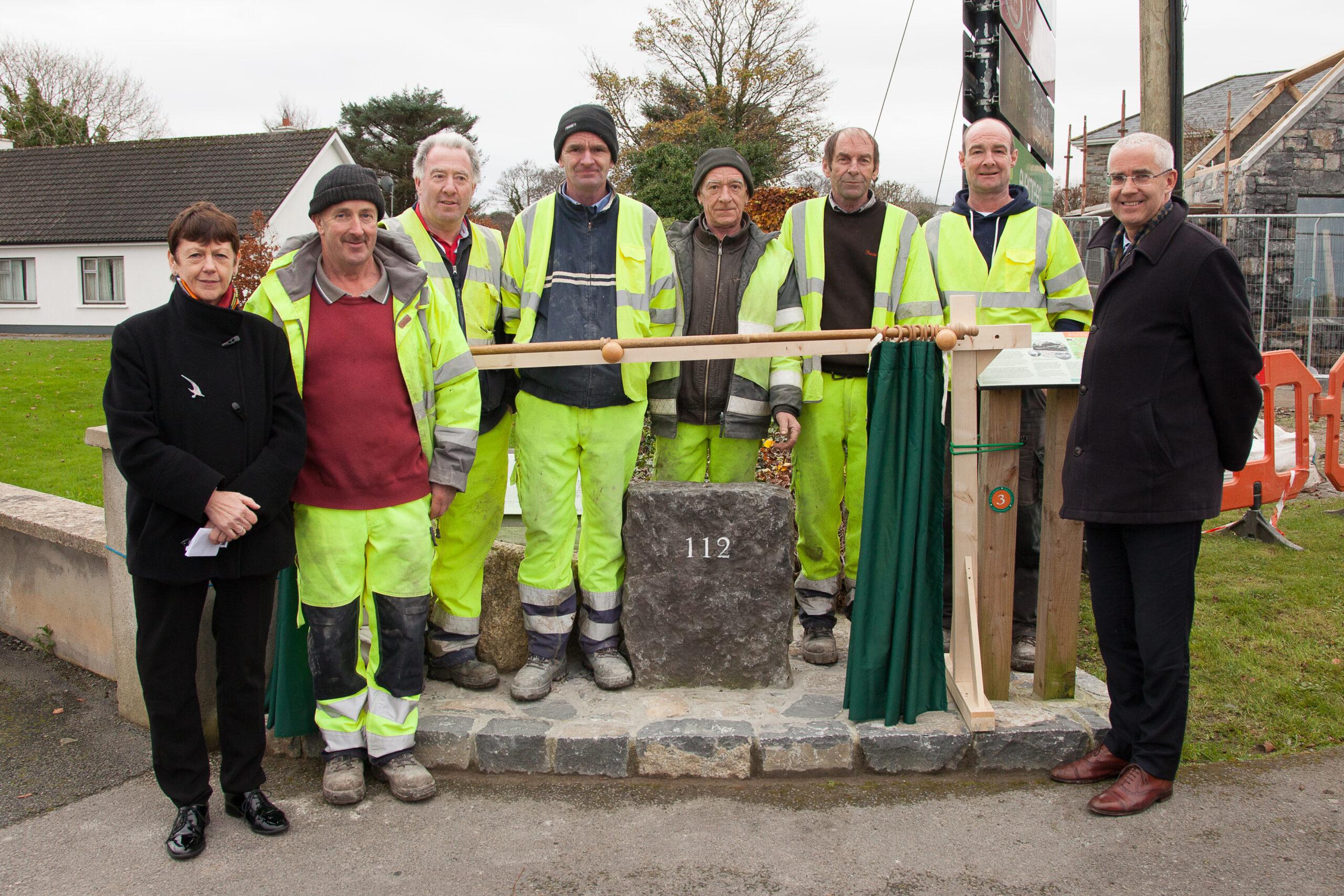
Mary Geraghty and Danny Carr of the Department for Employment & Social Protection with Pat McDonagh, Jimmy Audley, Gerry Molloy, Martin Joe Cooke, John Faherty, and Eamon Lydon
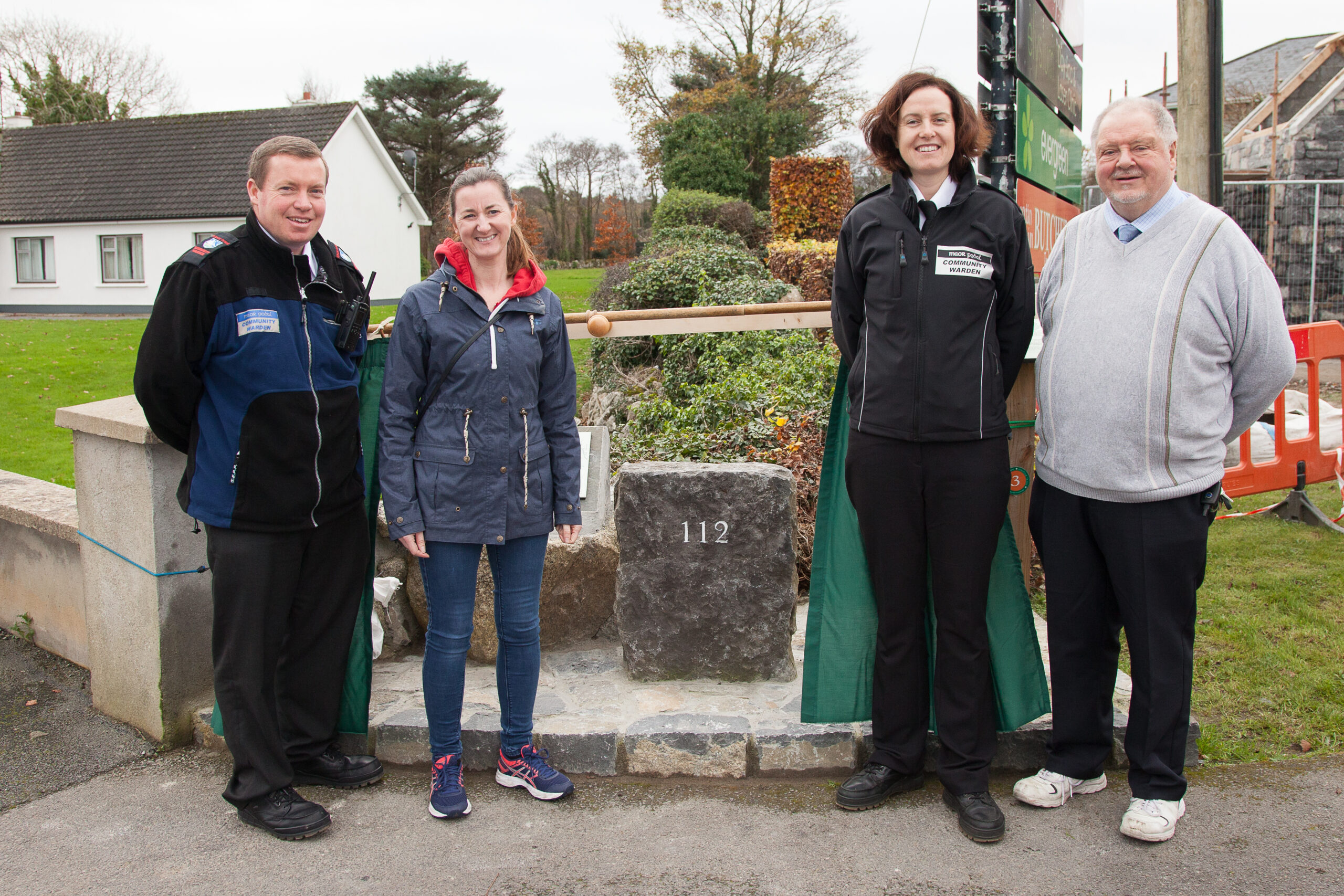
Thomas O'Sullivan Galway County Council Community Warden, Pauline Maher Moycullen TidyTowns, Rosina Joyce Galway County Council Community Warden, and Tomas O'Cadhain of Moycullen Heritage
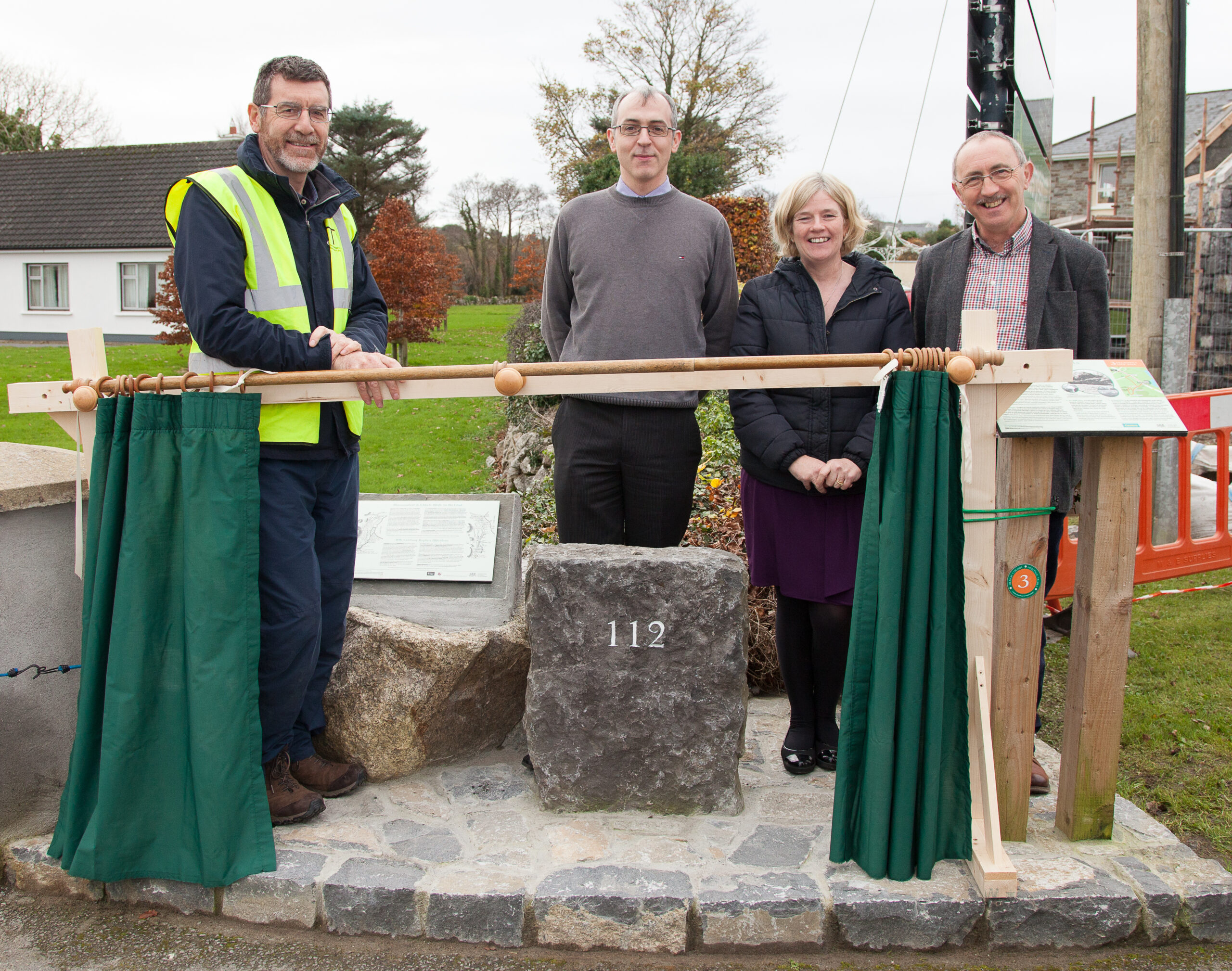
Transport Infrastructure Ireland Archaeologist Jerry O'Sullivan, Irish Workhouse Centre - Portumna Manager Steve Dolan, County Galway Heritage Officer Marie Mannion and Community Archaeologist Dr. Christy Cunniffe.
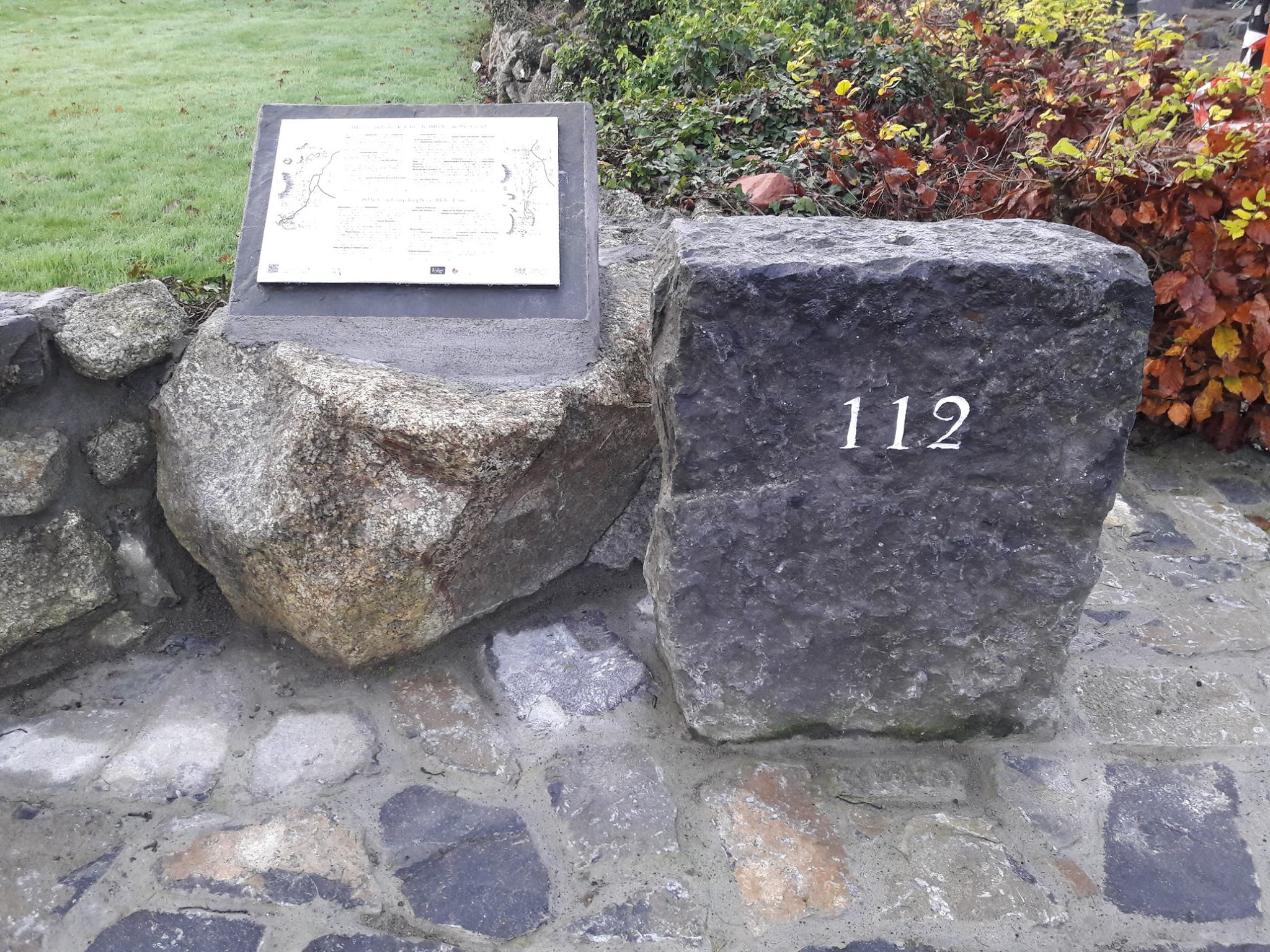
Replica milemarker #112 situate at An Fuarán, Maigh Cuilinn

Patrick Feeney and his grandmother Mary Ann Feeney at Launch of Replica Milestone #112
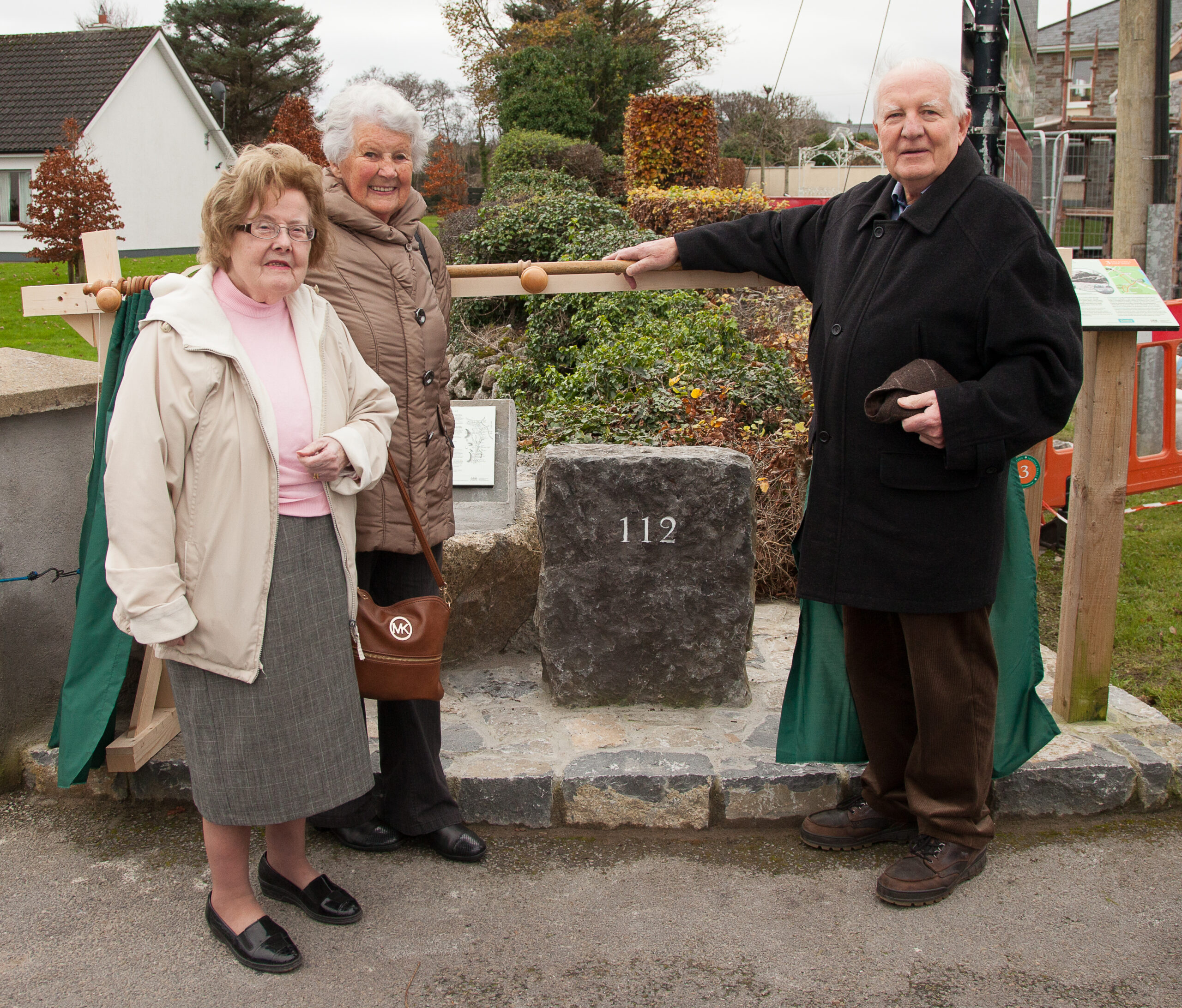
Vera Morrison Uillinn, Josephine and Pat Leonard Ballyquirke
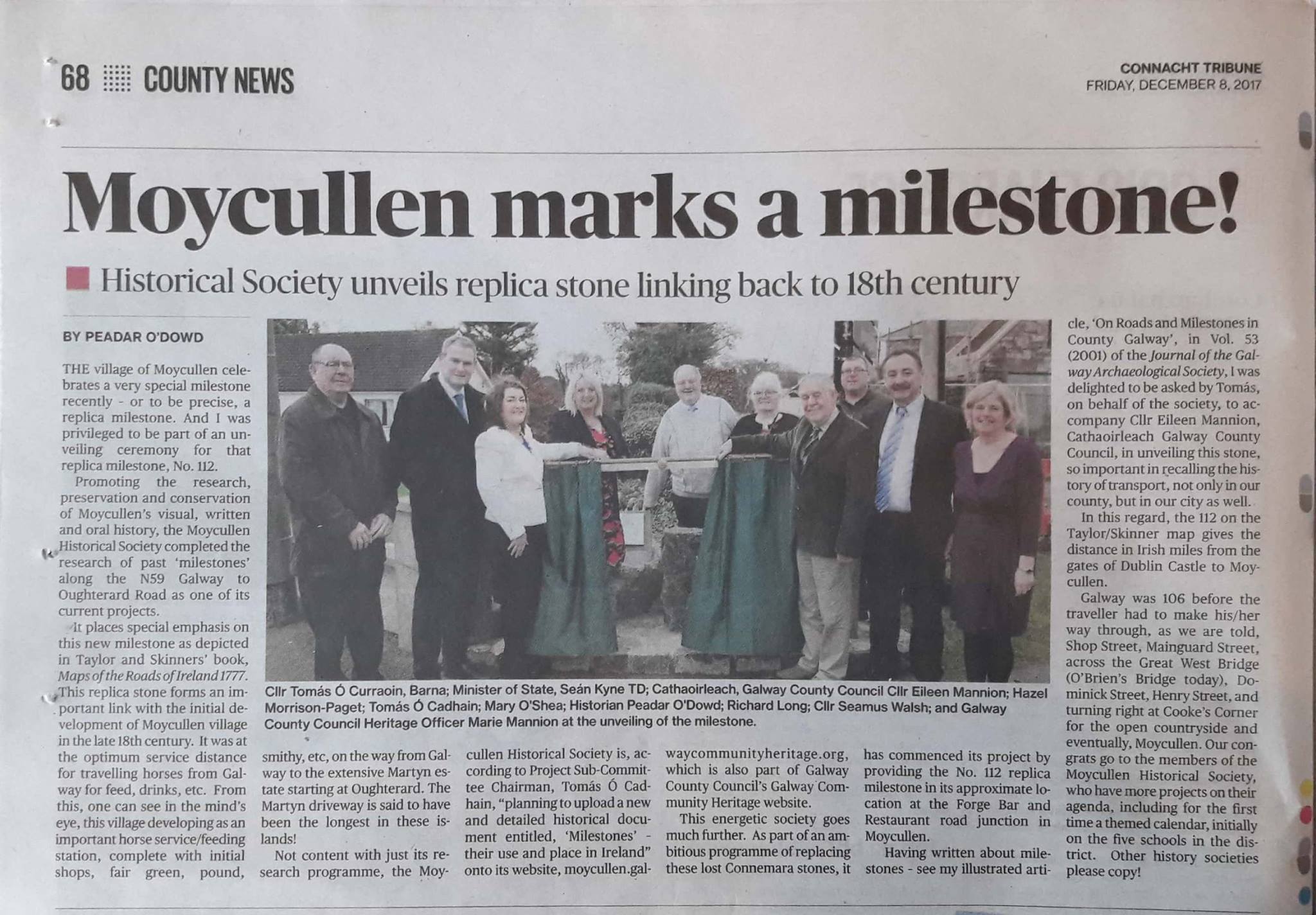
Article by Peadar O'Dowd in edition 8 December 2017 of the Connacht Tribune
Courtesy Connacht Tribune
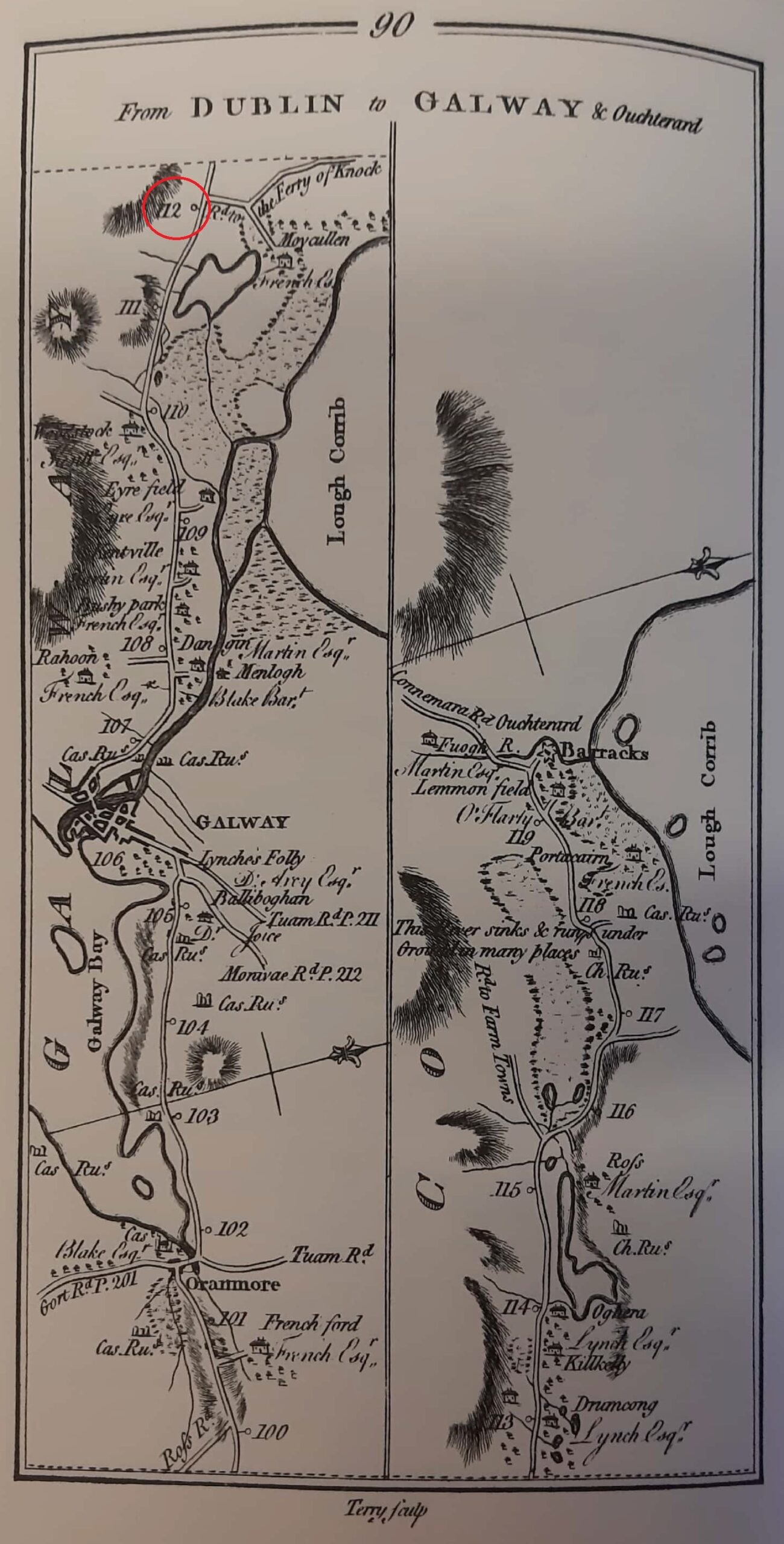
Extract from Taylor and Skinner's’ 1777 book “Maps of the Roads of Ireland"
Official Launch
At An Fuarán on 17th November 2017, County Cathaoirleach Cllr. Eileen Mannion and renowned author & historian Peadar O’Dowd unveiled an 18th century Replica Milestone, placed at the approximate location shown in Taylor and Skinner’s’ 1777 book “Maps of the Roads of Ireland“.
The number “112” engraved on the milestone indicates a measurement, in old Irish miles, to this point from the gates of Dublin Castle – the then centre of British rule in Ireland. No longer used this (112) old Irish miles distance equates to approximately 229 km. today.
Early use of Milestones
Milestones, also termed ‘milemarkers’, were initially used in Ireland from the early 18th century, as an indicator of distance and direction for road users – primarily for the gentry, military and trade.
They were also used as a basis of costing for carriage of people, post and packages on most of Ireland’s main ‘post roads’ and on roads between most market towns. Charles Bianconi, father of affordable public transportation in Ireland, who had a stop in Moycullen for his horse drawn stage coaches in the early-mid 19th century, often used milestones to estimate his ‘car’ carriage costs.
The early Postal Service used milestones as a basis for the costing of postage prior to 1840. For example, in 1814, a letter or parcel from Dublin to Moycullen would have cost 10 old pence. Index linked this would equate to about €5.00 today (2017).
Original Milestones are now a protected structure all over Ireland. However, (sadly) whether lost, removed or stolen, most of them have disappeared over time.
Following the unveiling ceremony, refreshments were served at The Forge Bar & Restaurant.
Origin of stone for marker #112
While not the original (# 112) Milestone, this specific stone is itself ‘antiquarian’ – it is carved from a stone salvaged from a Co. Sligo road/rail limestone bridge first built in the 1860’s.
Thank you to Peadar O’Dowd for his very complimentary article in the Connacht Tribune dated 8 December 2017
No Comments
Add a comment about this page