
Heritage Week 17th-25th August 2024
This year Moycullen Heritage/ will be celebrating two events during Heritage Week 17th-25th August, 2024.
The first event:
Moycullen and Killanin historical connections: by road and railway
Saturday 17th August 2024 at 7.30 pm in Killanin Community Centre, H91 N5DC.
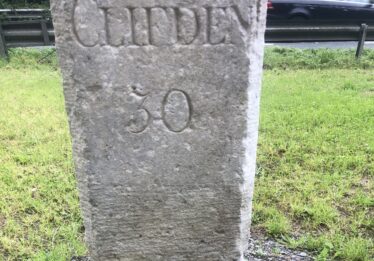
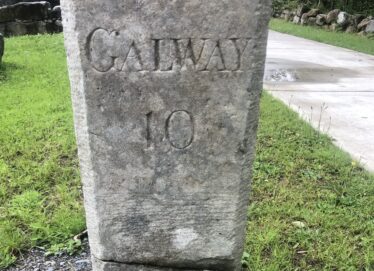
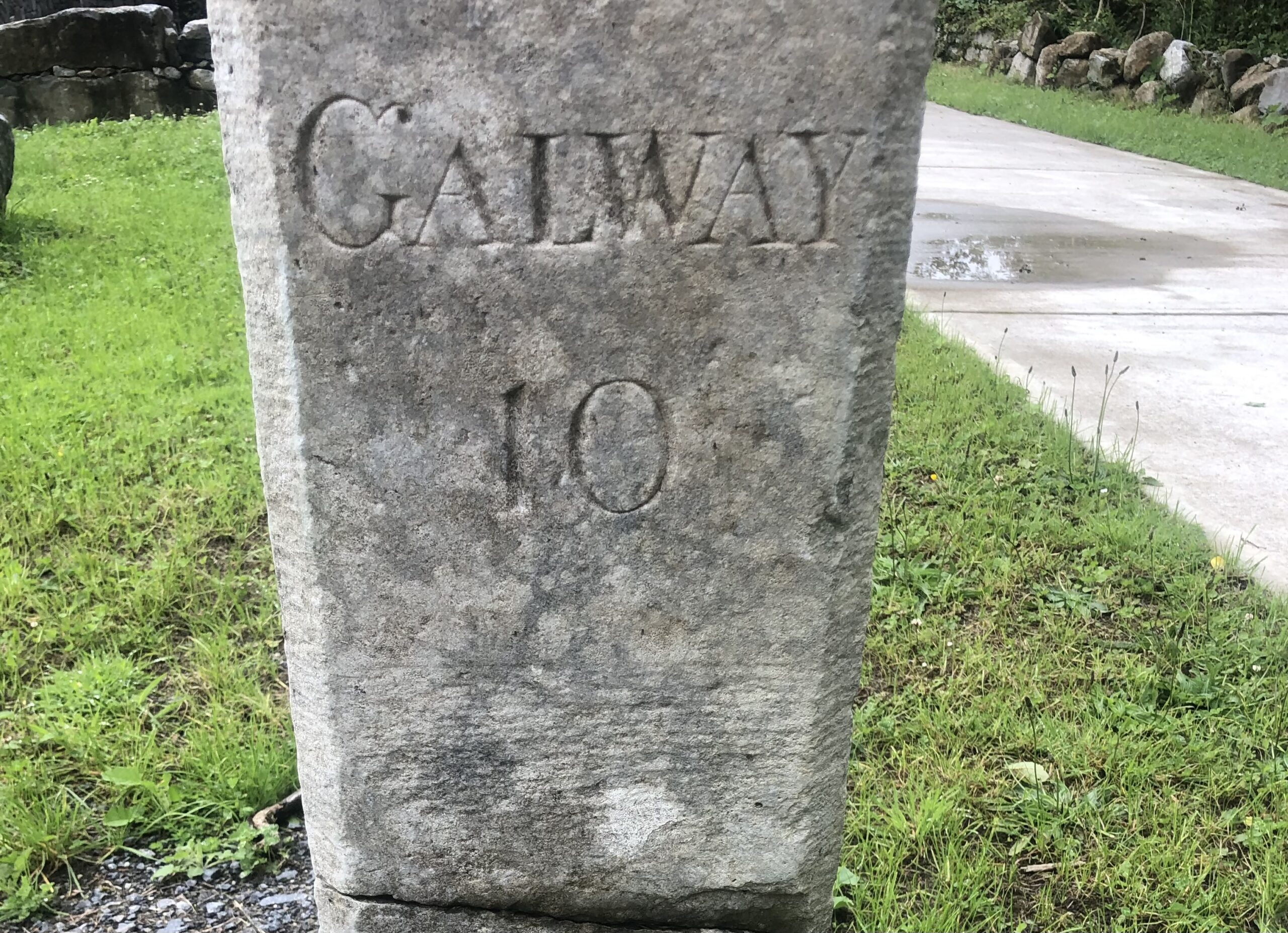
Moycullen Heritage/Cumann Staire Ruaidhrí Uí Fhlaitheartaigh is launching the new Milestone Trail following the discovery and restoration of an old Milestone in Killanin. The evening will include insightful talks and stories on our historical
connections and routes.
*Jerry O’Sullivan of Transport Infrastructure Ireland will talk about the ancient Milestones on
our routes and roads.
* Kathleen Villiers-Tuthill, a native of Clifden and an award-winning historical author will talk on
the old railway line that once passed through Moycullen and Killanin, a lost rail connection to
Connemara.
* Anthony Previte, author of various book on early Christian and Monastic Sites will talk about
the old St. Brecan Church and graveyard in Killanin.
*Bernie Doherty, Galway Community Archaeologist will give us an understanding of the
children’s burial grounds.
Please join us for an interesting evening as we re-live our local heritage.
Refreshment will be served.
The second event:
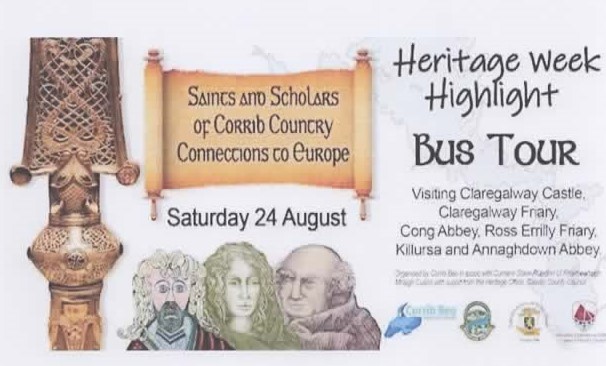
Heritage Bus Tour-Saints and Scholars of Corrib Country: connections to Europe
Saturday 24th August
Bus pick up @ 08.30 An Fuaran, Moycullen and 08.50 @ Galway Cathedral
This tour must be booked on eventbrite.
The first stop is at Claregalway Friary, then across to Claregalway Castle for tea/coffee and scones. Followed by a visit to these locations: Cong Abbey, Ross Errilly Friary, Killursa and Annaghdown Abbey.
You won’t miss a word, as commentary will be available on a smartphone or tablet with a mobile data connection. To make best use of the technology, bring a fully charged smart device with compatible earpiece/headphones. If you don’t have access to technology, don’t worry! You will still enjoy the tour; we will make sure of it.
Wear comfortable shoes and dress for all weathers.
The price includes tea/coffee scones at Claregalway Castle.
Important: Bring a packed lunch as the venues are remote and there will be only limited opportunity to buy food.
The genius of the medieval Irish is a topic that is seldom explored outside the gates of universities. The country’s medieval saints and scholars made an extraordinary contribution to the intellectual tradition of the European Continent. Their influence inspired authors, poets, great explorers and early science, along with almost the full gamut of knowledge and learning. Their phenomenal legacy not only endures to this day, but its hidden clues are in plainest sight, blinding with their ancient light.
Two of the most famous and influential people of medieval Europe are associated with Corrib country. Come and meet them and discover how a distant island on the edge of Europe became acclaimed for its rich cultural and intellectual heritage.
The tour is led by Eugene Jordan who’s blog on Irish Medieval history has nearly 230,000 followers. The theme for National Heritage week 2024 is Connections, Routes & Networks and the objective of this tour is to explore the links, forged in medieval times, between Ireland, her neighbouring islands and the continent of Europe. Find out the route that the German eagle took to feature on the flag of Connacht! Discover forgotten facts like those of the people who were educated on islands and on the shores of the Corrib, one inspired Dante’s Divina Comedia, another has a church dedicated to him in the ancient Carolingian capital of Aachen. Find out who was the Irish saint who featured in what the Smithsonian magazine described as ‘a medieval best-seller’. A tour packed with interesting facts that everyone should know!
Eugene will be the bus tour guide tasked with introducing participants to the lesser-known achievements of the medieval Irish associated with the Corrib and beyond. Expert speakers will be assigned to each venue on the tour. They will bring to life the characters in the story, show the evidence to support it, and how to interpret the archaeological remains at each site.
No Comments
Add a comment about this page